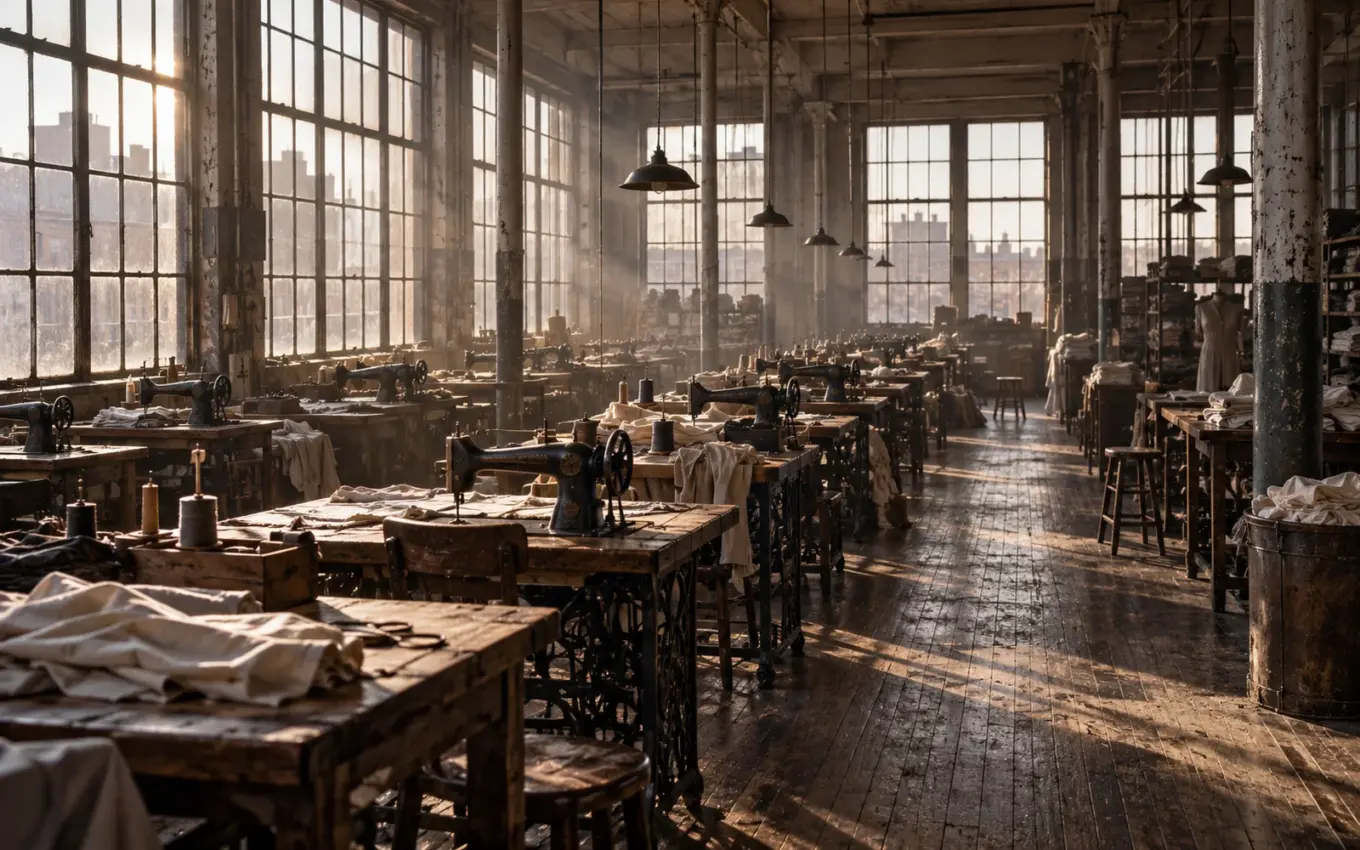
The Triangle Shirtwaist fire began near the end of a working Saturday on 25 March 1911. Employees were still inside a garment factory occupying the upper floors of the Asch Building in Manhattan. Within minutes, a workplace became a trap. One hundred and forty-six people died.
Many of the victims were young immigrant women and girls making fashionable blouses for customers elsewhere in the city. Their deaths exposed the conditions hidden behind an ordinary consumer product: crowded workrooms, weak protections and escape arrangements that failed when they were needed most. New York watched the catastrophe unfold from the pavement below.
Before the Triangle Shirtwaist fire
The Triangle Waist Company occupied the eighth, ninth and tenth floors of the building at Washington Place. Approximately 500 people worked there. The National Park Service’s history of the site describes a workforce largely made up of immigrants from Southern and Eastern Europe, including many Jewish women.
These workers belonged to a city whose garment industry depended on long hours and low pay. Labour organisation offered one way to challenge those conditions, but speaking publicly carried risks for someone whose wages supported a household. The ability to refuse unsafe work was sharply limited by the need to keep working.
The Cornell University Kheel Center’s historical account places the factory within that wider struggle. Triangle employees had participated in the major garment strike of 1909. The fire therefore did not reveal an entirely unknown problem. It made the consequences of familiar conditions impossible for the wider public to ignore.
A fire outran the warning
Flames broke out on the eighth floor and spread through a space filled with combustible material. Some employees escaped down stairs or by elevator. People on the tenth floor reached the roof and were helped across to a neighbouring building. Workers on the ninth floor faced a much more desperate situation.
One stairway route was blocked by fire. At the Washington Place exit, workers encountered a locked door. The external fire escape collapsed. Firefighters arrived, but the height of the workrooms and the speed of the blaze severely restricted what rescuers could do. Some people fell or jumped from the windows while onlookers watched below.
The New York City landmark assessment preserved by Cornell reconstructs the building and its failures. Its physical details matter because the tragedy was shaped by space: a door, a stairway, an upper floor and the distance to a possible exit could determine whether someone survived.
The witnesses could see, but could not reach
Disasters often arrive in public memory through later photographs or testimony. At Triangle, people in the street witnessed the emergency as it happened. They could see workers at the windows but could not bridge the distance between the pavement and the burning floors.
That visibility made the fire a public confrontation with industrial life. The people dying above the street were not an anonymous workforce somewhere beyond the city’s attention. They were present in the same neighbourhood as shops, homes and university buildings. The factory’s walls could no longer conceal the conditions of employment inside.
Cornell’s archive of original documents, testimony and photographs preserves the event from several directions. It also records the continuing work of identification. The archive makes it possible to move beyond a single spectacular image and recover names, experiences and the evidence used to challenge official and corporate accounts.
Acquittal did not settle the public question
Factory owners Isaac Harris and Max Blanck were prosecuted for manslaughter. In December 1911, a jury acquitted them. A central issue was whether the prosecution had proved the owners knew that the relevant door was locked. The verdict was a criminal-law outcome, not a finding that the workplace had been safe.
The Kheel Center’s account of the investigation and trial explains that distinction and follows the later civil proceedings. It shows the gap that can open between the public’s expectation of accountability and the legal questions a particular prosecution must answer.
For bereaved families, that gap was not an academic point. The trial could examine responsibility under a defined charge; it could not restore a wage earner, daughter or sister. Nor could an acquittal remove the evidence that people seeking escape had encountered conditions a safe workplace should never have imposed on them.
What the fire changed
The disaster intensified campaigns for stronger factory regulation and worker protection. New York investigated conditions and enacted reforms addressing fire safety, working hours and basic facilities. The changes emerged through political action and sustained organising, rather than appearing automatically because the loss of life was so shocking.
A New York State Department of Labor history of the fire and its legacy places those reforms within the development of workplace safety. Frances Perkins, who witnessed the disaster and later became US secretary of labor, carried its lessons into a much longer public career.
The building survived and eventually became part of New York University. That survival gives the story an unsettling physical continuity: the city could repair the structure even though it could not repair what had happened inside it. The fire remains a powerful measure of what safety really means. A workplace is not protected merely because a building stands after the flames. Protection means the people working there can get out alive.