The Chernobyl disaster began inside a power station but could not be contained within its perimeter. In the early hours of 26 April 1986, reactor four exploded at the Chernobyl nuclear plant in the Ukrainian Soviet Socialist Republic. A major fire and the release of radioactive material transformed an industrial accident into an international emergency.
Nearby residents could see that something extraordinary had happened without possessing the information needed to understand the danger. Farther away, scientists would detect contamination before receiving a clear account from Soviet authorities. The catastrophe became a struggle over physical exposure, public knowledge and the cost of delayed decisions.
How the Chernobyl disaster began
The accident occurred during a test at the plant. Reactor design vulnerabilities, the conditions created during the test and failures in safety practice combined in a destructive sequence. Reducing that sequence to one reckless worker or a single misunderstood switch leaves out the larger system that made the accident possible.
The International Atomic Energy Agency’s technical assessment places the event within the reactor’s behaviour and the spread of contamination. The essential outcome is clear: explosions damaged the reactor, and a prolonged release carried radioactive substances into the atmosphere.
The physical boundaries that normally separate nuclear fuel from the surrounding environment had failed. Firefighters and plant personnel confronted a damaged facility in conditions whose full implications were not immediately understood. Their work belonged to an emergency in progress, not the tidy sequence of causes and consequences that later diagrams could present.
The resulting investigation therefore had to look in two directions: back through the decisions and reactor conditions that preceded the explosion, and outward through the environment into which the radioactive material was moving.
The city beside the plant
Pripyat, built to house workers and their families, lay close to the power station. It was evacuated on 27 April, the day after the explosion. Residents left a functioning city of homes, schools and public buildings while the longer-term meaning of their departure was still emerging.
The United Nations Scientific Committee’s major assessment records the evacuation of approximately 116,000 people from affected areas during 1986. That number describes a protective intervention, but also an enormous disruption of ordinary life. A map of evacuation zones cannot show the personal significance of the possessions, neighbours and routines left behind.
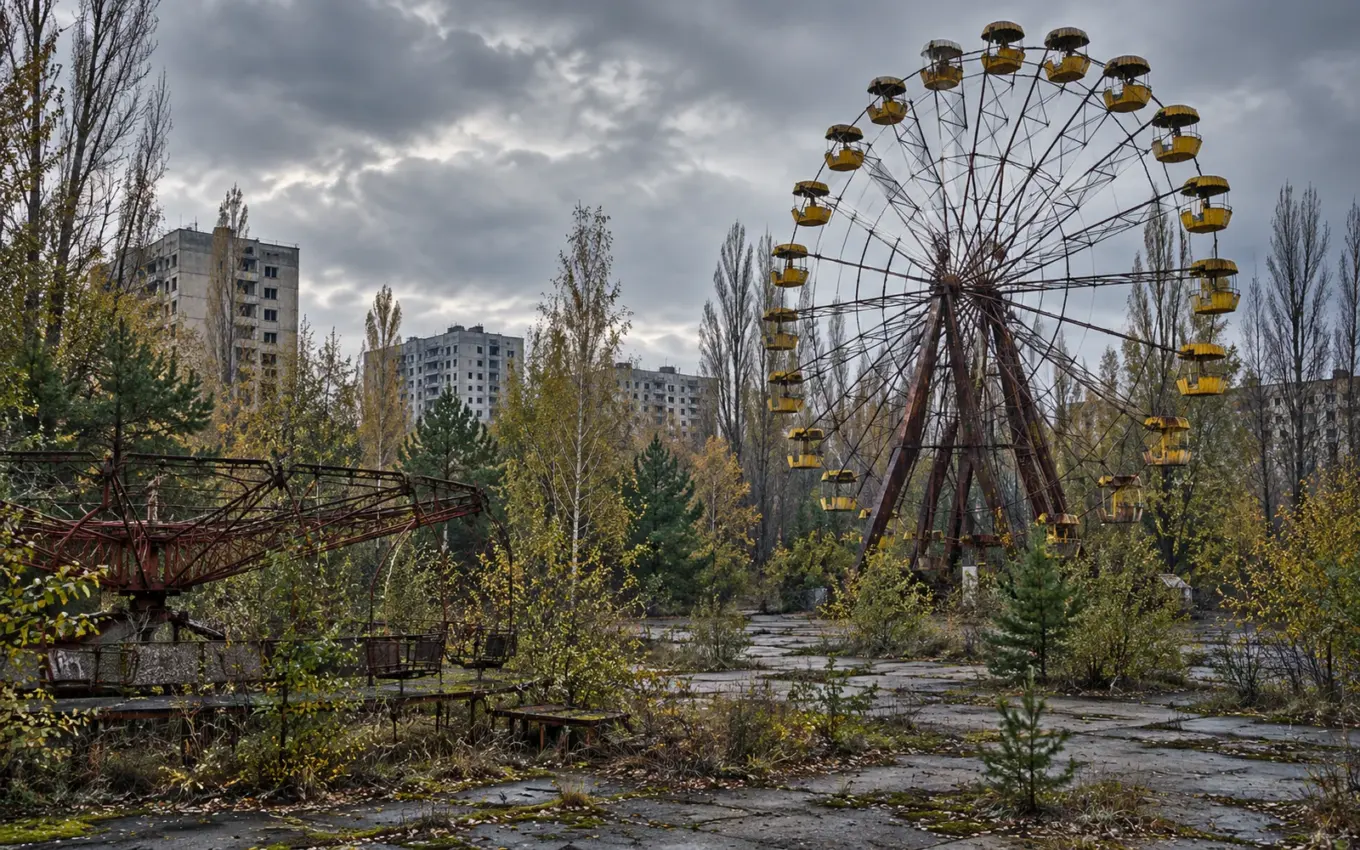
The abandoned city later became one of the disaster’s most recognisable images. Its empty buildings can suggest that history stopped there. For the people displaced, however, life continued elsewhere under difficult conditions. They had to find work, maintain relationships and raise children while dealing with uncertainty about exposure and the possibility of returning home.
The alarm sounded beyond Soviet borders
On 28 April, radiation monitoring at Sweden’s Forsmark nuclear plant revealed contamination. Initial checks had to establish whether the Swedish station itself was responsible. The evidence instead pointed to material arriving from outside the country.
A contemporary account by Swedish radiation-protection specialists, published by the IAEA, describes the detection and response. It gives the international story an unusually concrete beginning: an unexplained monitoring result at a distant facility became evidence of a disaster elsewhere.
Radioactive material did not respect national borders or wait for an official announcement. The monitoring network made secrecy harder to sustain, while the lack of prompt information complicated the assessment of what had occurred. The episode exposed a basic weakness in international emergency arrangements: a neighbouring country could detect the consequences of an accident before being told its nature.
What the health evidence can establish
The human toll requires careful categories. According to the World Health Organization’s assessment, 28 emergency workers died from acute radiation syndrome during the first three months. That figure is not a complete, all-time death toll for the disaster. It describes a particular group, condition and period.
The strongest established later cancer effect concerns increased thyroid cancer among people exposed when young, especially through radioactive iodine. Long-term studies also have to account for dose, age, disease latency and the difficulty of identifying an individual cancer’s cause. Large projected totals and directly observed deaths are different kinds of evidence.
This is not a reason to diminish the catastrophe. Precision makes the account more powerful because it reveals what happened without using a frightening number as a substitute for explanation. Some consequences can be measured with considerable confidence; others depend on models, definitions and assumptions that should remain visible to the reader.
A disaster larger than the exclusion zone
The United Nations report on Chernobyl’s human consequences examines displacement, economic disruption and the social effects of the accident. Fear and stigma became part of the burden carried by communities already coping with contamination and the loss of home.
Chernobyl also changed how the world discussed nuclear safety, institutional openness and emergency information. The damaged reactor was a technical object, but the decisions surrounding it belonged to political and administrative systems. Understanding the disaster requires attention to both: the physics that made the release possible and the organisations responsible for recognising and communicating danger.
The most haunting image is not simply a ruined building. It is the distance between an ordinary evening in a working city and the morning when that city began to lose its future. Chernobyl endures because it showed how quickly a highly organised society could become unable to answer the question its people needed answered first: is it safe to stay?