
The Zodiac killer became notorious not only because people were attacked, but because the killer refused to remain invisible. He wrote to newspapers. He sent cryptograms. He claimed responsibility, demanded attention and transformed private acts of violence into public messages that anyone could read over breakfast.
The Zodiac Killer’s Confirmed Attacks
On December 20, 1968, teenagers David Faraday and Betty Lou Jensen were killed near Lake Herman Road outside Vallejo. At first, the case was a double murder with no public identity attached to the killer.
Just over six months later, the pattern became harder to dismiss. On July 4, 1969, Darlene Ferrin and Michael Mageau were shot at Blue Rock Springs. Ferrin died. Mageau survived.
Three Newspapers Receive the Same Nightmare
Later that month, three newspapers received letters from a writer claiming responsibility for the attacks. Each included part of a cipher and details intended to demonstrate knowledge of the crimes.
This was the moment the case became something more than a manhunt. The killer understood that a newspaper could carry fear into thousands of homes at once. The violence happened at isolated locations; the letters happened everywhere.
In an August letter, the writer used the name that would become inseparable from the case: Zodiac.
The Hood at Lake Berryessa
On September 27, 1969, Bryan Hartnell and Cecelia Shepard were approached at Lake Berryessa by a man wearing a distinctive hood marked with a crossed-circle symbol. Both were attacked. Hartnell survived. Shepard died.
The theatrical appearance of the attacker added a new layer to the case, but the core danger remained practical and human: the offender approached people in an isolated recreational area and controlled the encounter before attacking.
The Taxi in Presidio Heights
On October 11, taxi driver Paul Stine was killed in San Francisco’s Presidio Heights. The location was different from the earlier lovers’-lane and lake attacks. The killer was now operating in a residential city neighbourhood.
Witnesses saw a man leaving. Police responded. A mistaken description transmitted over radio became one of the most discussed errors in the investigation. The killer escaped.
Soon afterward, the Chronicle received a letter containing a piece of Stine’s shirt, convincing investigators that the writer was connected directly to the murder.
Murder Turned Into a Public Performance
Zodiac continued sending letters and cards. Some included ciphers; some threatened further violence. The writer boasted, mocked law enforcement and attempted to control coverage.
One cipher was solved quickly by a schoolteacher and his wife. Another, known as the Z340, resisted solution for decades before an international team announced a solution in 2020. Other short ciphers remain unresolved.
The letters created a strange imbalance. The killer became verbally present while remaining physically unidentified. Readers could see his handwriting, symbols and self-invented persona without knowing the face behind them.
The Difference Between Claims and Proof
The Zodiac claimed responsibility for more killings than law enforcement has firmly tied to him. That distinction is important. Serial offenders who seek publicity may exaggerate, appropriate unrelated crimes or deliberately create confusion.
DarkRecord therefore uses the commonly accepted core: five confirmed deaths and two surviving victims across the four canonical attacks.
Names Without a Conviction
Numerous suspects have been proposed, some by investigators and many more by authors, amateur researchers and online communities. Arthur Leigh Allen became the most famous name associated with the case, but no prosecution established that he was Zodiac.
The FBI assisted local agencies with forensic and cryptographic work, and the bureau’s Vault still contains extensive Zodiac files. But the killer’s legal identity remains unresolved.
He Controlled the Story by Writing It
The Zodiac case forces investigators to evaluate every claim twice. A letter can contain information only the killer should know, making it valuable evidence. The same writer can then claim an unrelated crime, exaggerate a victim count or threaten an attack that never occurs. Publicity becomes both evidence and contamination.
The letters also invited ordinary readers to become amateur investigators. Ciphers could be copied, rearranged and solved. Suspect photographs could be compared. Decades before internet forums, the case already had the structure of a crowdsourced mystery.
That attention has kept the case alive, but it also creates false certainty. A convincing theory is not an identification. A resemblance is not a fingerprint. A name repeated for fifty years is still not a conviction.
Minutes From Being Caught
The Stine murder produced one of the case’s most haunting near-misses. Police were on the streets quickly and witnesses had seen a man leaving the cab. Yet the suspect vanished into San Francisco. Later discussion has focused heavily on the incorrect radio description initially broadcast to officers.
Whether that error alone allowed the killer to escape cannot be proved. What is certain is that the closest urban encounter in the series still ended with no arrest.
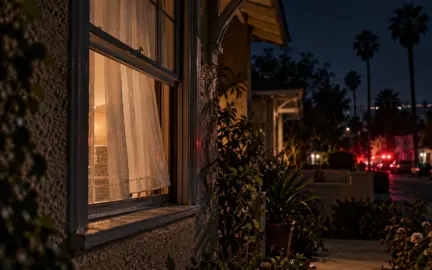
The featured image is an atmospheric illustration, not documentary evidence from the case.
Sources and record
Key references include the FBI Vault’s Zodiac files and established timelines of the letters and confirmed attacks. DarkRecord distinguishes confirmed crimes from later claims made by the letter writer.
Continue with The Monster of Florence or Setagaya.