The Axeman of New Orleans entered homes at night. That single fact is more frightening than the mythology later built around him. Between 1918 and 1919, a series of attacks struck households in and around New Orleans, many connected to Italian immigrant grocers. Doors were breached, sleeping people were attacked, and weapons were sometimes taken from the victims’ own homes.
Axeman of New Orleans
The Axeman of New Orleans is often treated like folklore, but the core crimes were real. During 1918 and 1919, households—many connected to Italian immigrant grocers—were attacked at night. In several cases, investigators found that the intruder had removed part of a rear door or otherwise created a small entry point.
The weapon was sometimes an axe belonging to the household. That detail is terrifying because it suggests an offender who did not need to arrive carrying a conspicuous arsenal. He entered the home and turned what he found there into a weapon.
The Pattern Becomes Impossible to Ignore
Joseph and Catherine Maggio were attacked in May 1918. Other households followed. Some victims died; others survived with severe injuries. Police and newspapers struggled to determine which attacks truly belonged to the same offender, and modern historians caution that later retellings often fold unrelated crimes into the Axeman legend.
The strongest pattern centred on Italian grocers and their families. Historian Miriam Davis, writing for Smithsonian, argues that understanding the attacks also requires understanding the prejudice of the era. Italian immigrants were frequently subjected to xenophobia, and early explanations sometimes leaned on stereotypes about secret societies or vendettas rather than evidence.
The Attack That Broke a Family
In March 1919, Charlie and Rosie Cortimiglia were attacked in Gretna, across the Mississippi River from New Orleans. Their young daughter was killed. Authorities initially pressured the injured family toward accusing neighbours, leading to arrests that later proved deeply questionable.
The episode shows how fear can distort an investigation. A community wants an answer quickly; investigators find a story that appears to fit; innocent people can become the target.
A Letter Addressed to a Terrified City
Then came the document that made the Axeman immortal. In March 1919, a letter published in the newspaper claimed to come from the killer. The writer promised another attack on a particular night but said homes playing jazz would be spared.
Whether the murderer actually wrote the letter has never been proven. That uncertainty is crucial. The letter may have been authentic, a hoax. What is documented is the city’s reaction: jazz filled homes and venues across New Orleans, and no Axeman attack was recorded that night.
The image is almost surreal—an entire city playing music into the darkness because someone claiming to be a killer had set the terms.
Then the Attacks Ended
Attacks attributed to the Axeman continued, although historians dispute where the true series ends. Smithsonian’s reconstruction argues that several later crimes traditionally attached to the Axeman were likely unrelated and that similar attacks may have occurred elsewhere in Louisiana.
No one was definitively identified as the killer. There was no final arrest and no confession that survived scrutiny.
The Killer and the Legend Are Not the Same
DarkRecord treats the letter and broader victim count cautiously because the historical record is messy. Some crimes attributed to the Axeman may not belong to the same offender. That uncertainty does not weaken the case. It makes it more disturbing.
Even after historians strip away exaggeration, a real unidentified attacker remains.
A City Reading About Its Own Nightmare
The Axeman operated in an era when newspapers were the fastest mass communication system available. Headlines carried each attack from one neighbourhood to breakfast tables in the city. The anonymous letter exploited that system perfectly. Whether authentic or not, it understood that terror becomes larger when people are told to anticipate a specific hour.
The city’s jazz response is remembered as almost festive, but beneath the music was a threat. People were not simply attending a celebration; many were participating in a collective attempt to avoid becoming the next target.
That is why the letter remains powerful even if it was a hoax. It demonstrates how quickly an unknown killer can gain psychological control far beyond the actual crime scenes.
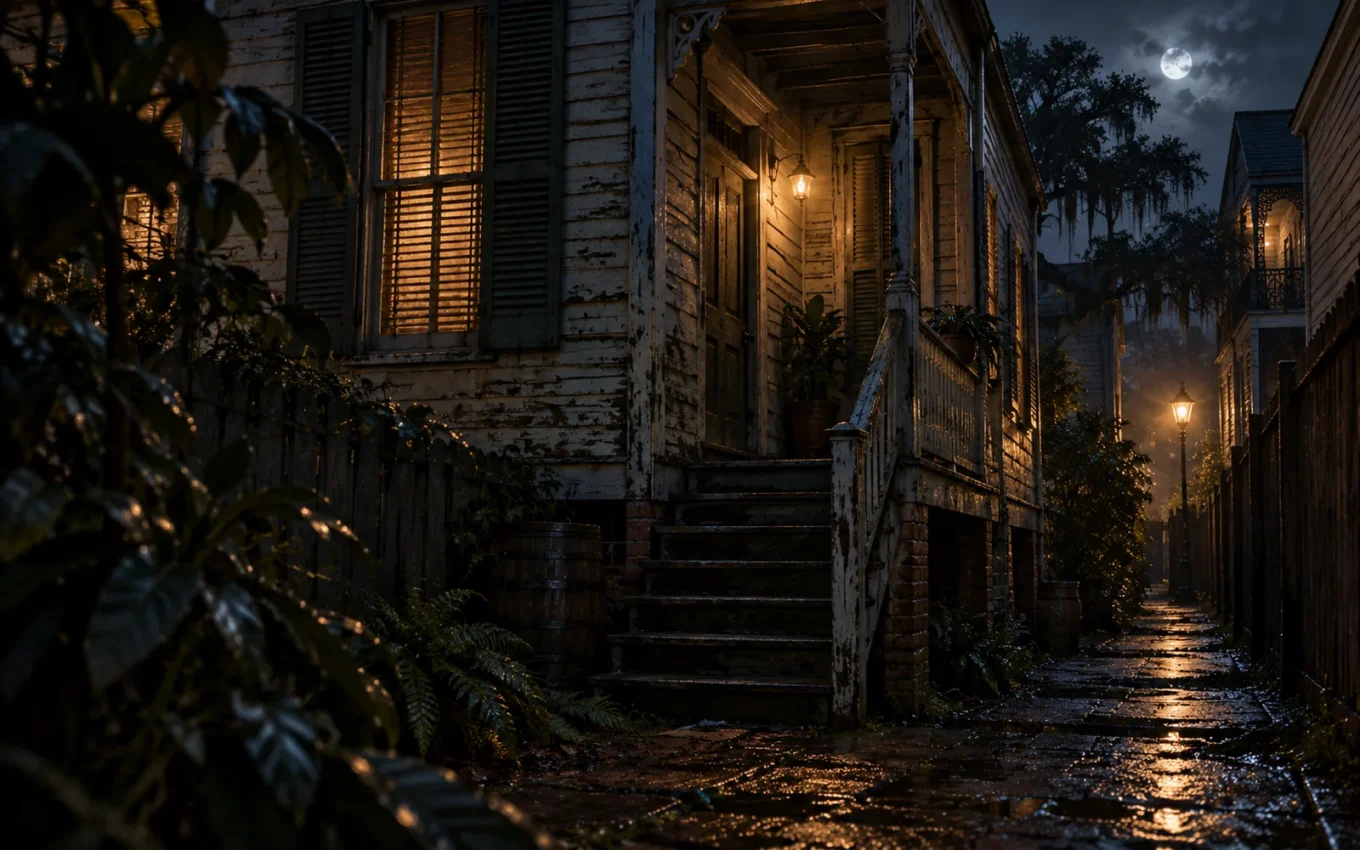
The featured image is an atmospheric illustration, not documentary evidence from the case.
Sources and record
This account relies on Miriam Davis’s historical reconstruction for Smithsonian Magazine and archival material from the New Orleans City Archives.
Continue with The Texarkana Phantom or The Midnight Assassin.