The Setagaya family murders are frightening for a reason that feels almost impossible: the killer left behind the kind of evidence that should have made disappearing difficult. Fingerprints. DNA. Clothing. Personal items. Traces of what he touched and what he did. Yet more than two decades later, police still do not have the name that matters.
Setagaya family murders
Mikio and Yasuko Miyazawa lived with their children, eight-year-old Niina and six-year-old Rei, in a small house in Setagaya, western Tokyo. By the end of 2000, much of the surrounding land had been incorporated into Soshigaya Park. Only a handful of homes remained near the family’s property.
December 30 looked ordinary. Tokyo Metropolitan Police records say the family had spent time shopping that day and later ate dinner and watched television together. Within hours, all four were dead.
A Window Facing the Dark
Police believe the killer entered from the park side of the house, likely through a second-floor bathroom window. A screen was found outside and traces around the area supported the possibility of an entry from the rear. This was not a front-door confrontation. The intruder appears to have come in from the dark edge of the property.
The attacks happened late on December 30 and into the early hours of December 31. The family was killed inside the home. The violence was severe, but the most extraordinary evidence came after the killings.
He Stayed
Most home-invasion murders create an intuitive picture of escape: the offender wants distance from the scene. Setagaya resists that picture. Police evidence indicates the killer stayed for hours.
He used the family’s computer. He ate food, including ice cream according to long-running police reporting. He used the bathroom. He handled documents. He moved around a house in which four people had just been killed, behaving less like someone terrified of discovery than someone who believed he still had time.
That behaviour is one reason the case is so disturbing. The killer did not merely invade a private home. For a period of time, he acted as if the home belonged to him.
A Room Full of Clues
The intruder left behind clothing and other items believed to be his. Police recovered fingerprints and DNA. Investigators studied a sweatshirt of a type sold in limited numbers in Japan, a grey knit hat, a hip bag, a scarf and other belongings. The Tokyo Metropolitan Police still display images and descriptions of these items in their public appeal.
The amount of evidence seems incompatible with an unsolved case. In fiction, this is the point where the walls close in on the culprit. In the Setagaya murders, they never did.
Police have spent decades comparing evidence, tracing products and asking for information about suspicious people or vehicles seen around the area. The official appeal remains active. A substantial reward has been offered for information leading to an arrest and conviction.
New Year’s Eve Morning
The bodies were discovered on the morning of December 31 by Yasuko’s mother, who lived nearby. New Year’s Eve in Japan is normally associated with family, food and ritual transition. Instead, the Miyazawa home became one of the country’s most haunting crime scenes.
The timing amplified the shock. A family had been attacked just before the country entered a new year, and the killer appeared to have left a dense trail behind him. Yet no name emerged from that trail.
Too Much Evidence, No Answer
The Setagaya evidence creates a paradox. Every new trace seems as though it should narrow the field, yet each one opens another branch. Clothing can be traced to stores, but a garment does not identify the person who bought or wore it. DNA can exclude people and define biological characteristics, but it only produces a name if there is a useful comparison. Fingerprints are powerful only when they match a known print. The case became a catalogue of nearly perfect clues without the final bridge to a suspect.
Investigators also studied the offender’s movements and the geography around the house. The park beside the property offered concealment and a possible approach route. The dwindling number of occupied houses in the redevelopment zone reduced the chance of a neighbour noticing a stranger. The scene therefore combined an urban address with an unexpectedly isolated edge.
That combination may explain part of the killer’s confidence. He was in Tokyo, one of the world’s largest cities, yet for crucial minutes the house sat beside darkness, parkland and emptying residential space.
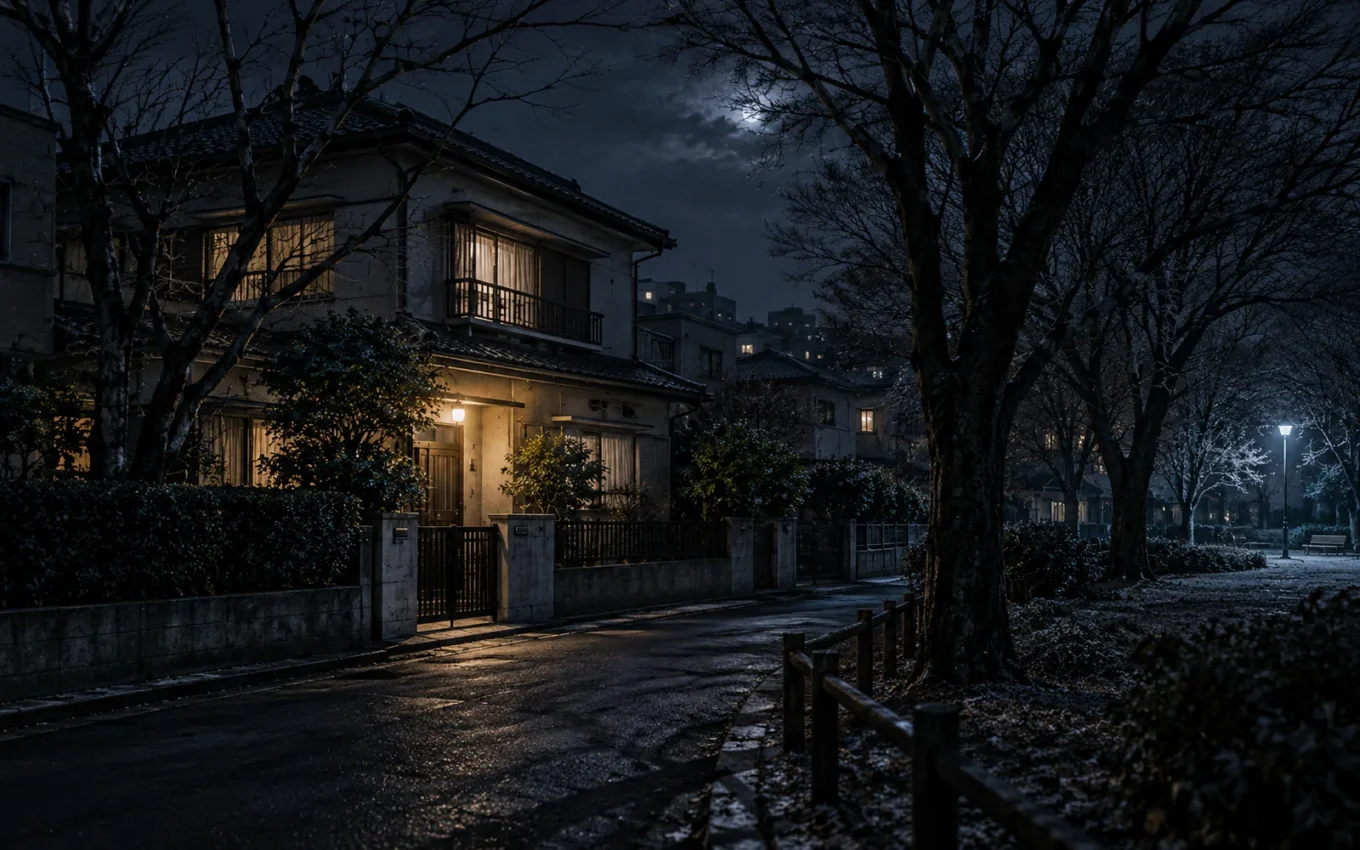
The featured image is an atmospheric illustration, not documentary evidence from the case.
Sources and record
This article relies on the Tokyo Metropolitan Police official case appeal and established Japanese reporting, including the long-running evidence summary published by The Japan Times.
Continue with Hinterkaifeck or The Zodiac Killer.