
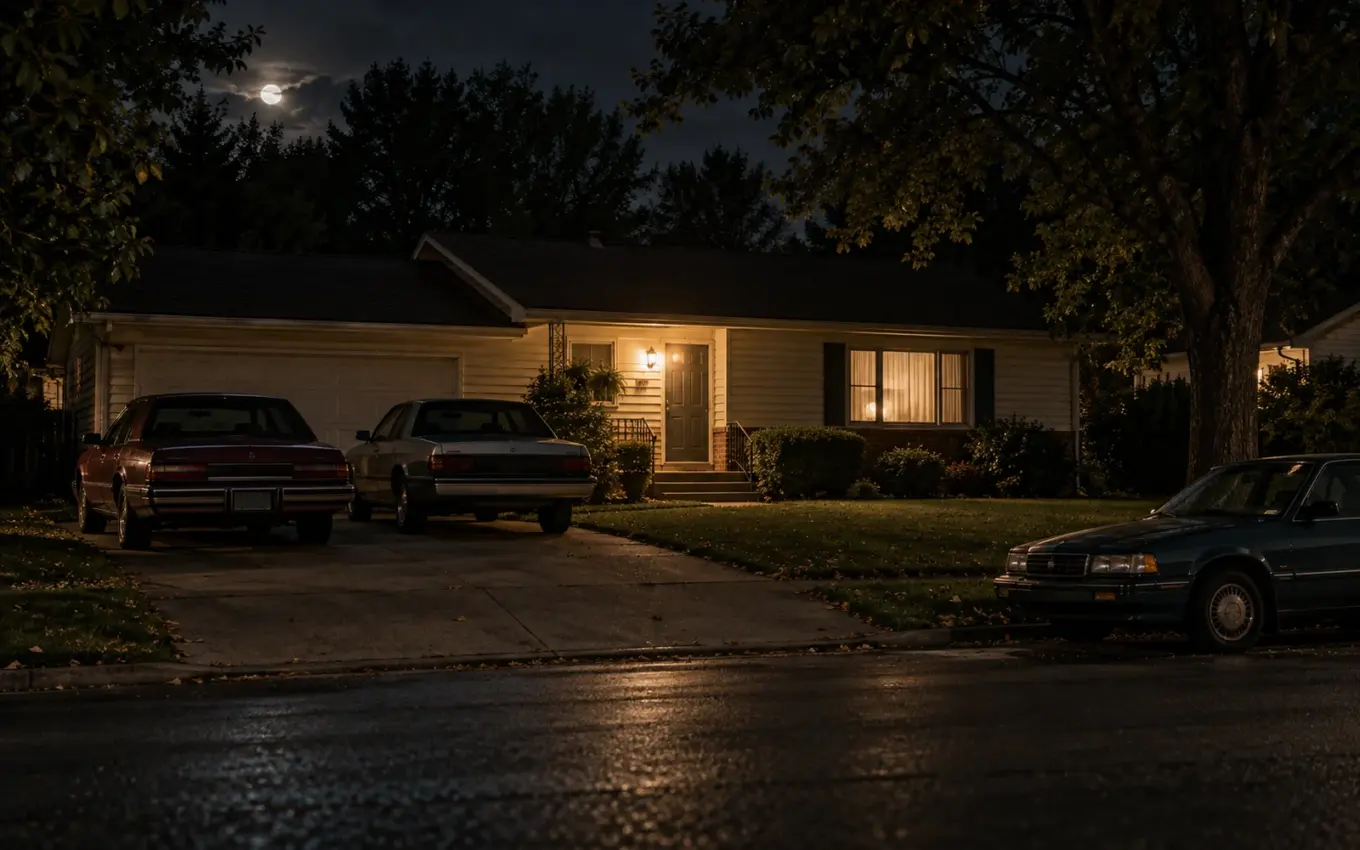
The cars were still there. So were the purses. In the Springfield Three case, the familiar signs of a hurried departure were replaced by something harder to understand: a house that appeared to have kept the lives of its occupants while losing the occupants themselves.
On the night of June 6, 1992, Suzanne “Suzie” Streeter and Stacy McCall had been celebrating their high-school graduation. By the following morning, both young women and Suzie’s mother, Sherrill Levitt, were missing. The FBI places the disappearance between approximately 2:15 and 7:30 a.m. on June 7. There has never been an established account of what happened inside that interval. [1]
The Springfield Three House
Suzie was nineteen. Stacy was eighteen. Sherrill, a cosmetologist, was forty-seven. The younger women had attended parties before going back to Sherrill’s home in Springfield, Missouri, to spend the night. A familiar house, with a parent inside, should have been the point at which the uncertainties of the evening ended.
Instead, it became the last known place connecting all three.
Their possessions complicated the idea that they had simply gone somewhere together. Vehicles remained at the property. Money, clothing and other personal effects had not gone with them. Even the family dog was left behind. The case records describe no obvious struggle that could explain three people disappearing from the same residence. [2]
An abandoned car on an isolated road tells a recognisable story, even when the ending is missing. A house full of belongings tells several stories at once. Its residents might be nearby. They might have answered the door. They might have been interrupted. Each possibility is easy to imagine, and none becomes evidence merely because it feels convincing.
That is the first disturbing feature of the Springfield Three: the scene offers the reassurance of an ordinary morning long after that reassurance has become impossible.
The Morning People Walked Through
Friends and relatives came looking for the women before the home was treated as the centre of a major investigation. In the early confusion, people encountered an empty house rather than a clearly marked crime scene. Police were not notified until later that day. [3]
This matters because the first hours of a disappearance are often lived by people who do not yet know a disappearance has occurred. Someone has overslept. Plans have changed. A person has gone out without mentioning it. There are many ordinary explanations to exhaust before the extraordinary one becomes unavoidable.
Two details acquired particular importance in later accounts: a broken glass globe from the porch light and an answering-machine message that was accidentally erased. The broken glass was reportedly swept up before investigators could examine its original arrangement. The recording could not be recovered for police to assess. [4]
Neither detail proves an attack. The light could have broken for reasons unrelated to the women. The message’s significance cannot be measured from a recording nobody can now review. Their importance lies partly in what has been lost: the chance to decide whether either mattered at all.
The result is a case in which small household objects seem to promise a revelation they cannot deliver.
Three People, One Missing Sequence
It is tempting to solve an empty room by choosing a doorway and putting a stranger in it. A knock, a threat, a familiar voice: each would provide a beginning. The Springfield Three record does not establish which beginning, if any, is correct.
No surviving account from inside the home explains how Sherrill, Suzie and Stacy left. There is no confirmed sequence showing who encountered danger first, whether the women were together when it began or how anyone persuaded or forced them away.
The number of missing people makes the gap feel especially unnatural. Three people might seem to offer three opportunities to resist, telephone for help or leave a trace. But that expectation is a reader’s expectation, not a reliable account of what people can do when threatened. We do not know the circumstances they faced.
Investigations and public attention have generated many theories. A theory can organise scattered details into something that resembles a complete story. It can also quietly turn an unknown into an accusation. The official missing-person notice does something less satisfying and more necessary: it retains the women’s names and the narrow facts of their disappearance. [1]
For their families, the missing sequence was never an intellectual exercise. It was the difference between knowing where to search and not knowing where to begin.
The Belongings That Remained
The Springfield Three are sometimes presented as if the house itself were the mystery. It is more precise to say the house held the last visible arrangement of three interrupted lives.
A purse is useful because someone expects to need it. A car remains parked because its driver expects to return to it, or because something has prevented the driver from leaving in the usual way. Such objects carry intentions, but they cannot explain how those intentions were overturned.
Nothing in the established record allows a final scene to be written responsibly. There is no verified confession that supplies the missing hours, no confirmed destination and no recovered testimony from the women themselves.
What remains is a night with a known beginning and an unfilled end: two friends finishing their graduation celebrations, a mother at home, and a morning in which the people expected to answer were no longer there.
The cars had not gone anywhere.
Someone had.
Sources and record notes
Record type: Researched nonfiction. Filed: October 15, 2026.
Established facts: Sherrill Levitt, Suzanne Streeter and Stacy McCall disappeared on 7 June 1992. Their cars and personal belongings remained at the house.
Uncertainty: No perpetrator or sequence of departure has been established. A broken porch-light globe and erased recording do not establish how the women disappeared.
- FBI — The Springfield Three
- Solve the Case — Suzie Elizabeth Streeter case record
- Solve the Case — Sherrill Elizabeth Levitt case record
- Wikipedia — Springfield Three (secondary overview and references)
Explore the DarkRecord story archive, or read how DarkRecord labels and sources its stories.