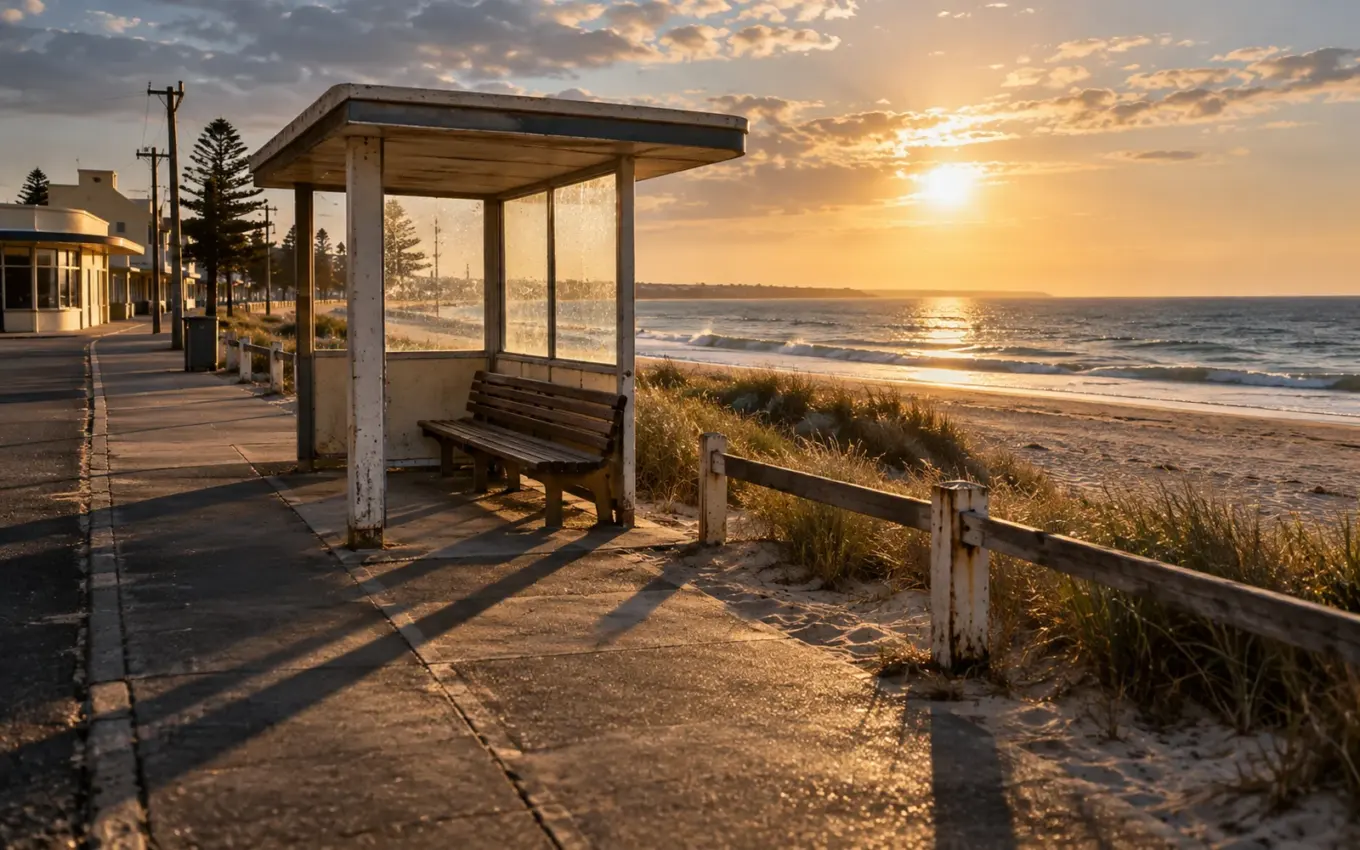
The Beaumont children set out for Glenelg Beach on Australia Day in 1966. Jane was nine, Arnna seven and Grant four. It was a trip to a familiar place in their own city, with a journey home already built into the day.
That return journey is the part of the story that never happened. The children were seen near the beach. They were seen at a cake shop. Then three separate lives vanished from a public place without leaving an established account of where they went. [1]
Before Anyone Was Looking
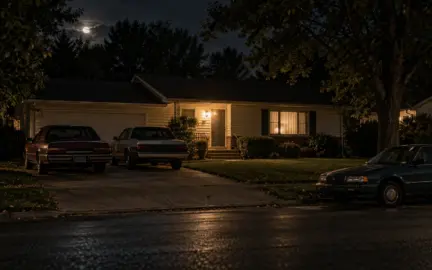
On January 26, the siblings left their home in Somerton Park for Glenelg. Their parents, Jim and Nancy Beaumont, expected them back that afternoon. The place was not an unexplored wilderness. It was a beach suburb with streets, shops, transport and people who could later be asked what they had noticed.
By evening, the failure to return had become a police matter. An operational log later released by South Australia Police records the report shortly before 7:20 p.m., followed by searches along the beach and surrounding foreshore. Jim helped look for his children. [2]
There is a particular cruelty in the first hours of a missing-child case. The distance between a harmless delay and an emergency can be crossed only in retrospect. At first there is still a bus they might have missed, a friend they might have followed, a reasonable mistake that can be corrected by bringing them home.
The Beaumont family had no way to know which ordinary explanation was the last one they would be able to believe.
Where the Beaumont Children Were Seen
Crime Stoppers South Australia identifies confirmed sightings at Colley Reserve and Wenzels cake shop in Mosley Street. These are not places that naturally suggest disappearance. They are locations where children might pause, play or buy something before continuing their day. [1]
Other witnesses reported seeing the siblings with an adult man. A description circulated, and an image of the possible companion became part of the public investigation. But being able to describe a person is not the same as establishing an identity. The reported sightings did not produce a conclusive answer about what happened next. [3]
That uncertainty should not be flattened into a scene of proven abduction. No verified account allows us to write the moment at which the children became unable to leave, or to assign their final movements to a particular uncharged person.
What makes the case so disturbing is the public setting itself. There were witnesses to fragments of a day. There was no witness who could supply the whole transition from a beach outing to three missing children.
Someone can be visible without being protected by that visibility. In a crowded place, a detail may seem unremarkable until the opportunity to understand it has passed.
Searches With No Homecoming
The immediate search grew into an investigation that drew national attention. The National Film and Sound Archive preserves television reporting that illustrates how deeply the disappearance entered Australian public memory. Its account describes repeated theories and suspects without a conclusive resolution. [3]
The case’s familiarity can conceal its scale. There were three missing children, not one collective figure from a famous mystery. Jane, Arnna and Grant had different ages, different experiences and different futures. Their names were repeated together because they had disappeared together, not because any of them had become interchangeable.
Police have treated abduction and murder as the suspected explanation. That is an investigative position, not a recovered final narrative. No established evidence in the cited accounts supplies a complete account of the children’s fate. [1]
Over the years, speculation created new cycles of attention. Each proposed answer invited another look at the same small set of known locations. A remembered face, an old property, a fresh search: the public could briefly experience renewed interest while the family faced the possibility of another disappointment.
The difference between those experiences is enormous. For a reader, an unresolved case can be put aside. For a parent, uncertainty has no clear closing time.
A Father Who Kept Waiting
Jim Beaumont died in April 2023, aged ninety-seven. Reporting on his death recalled the decades he had lived without a confirmed explanation for the disappearance. Former victims of crime commissioner Michael O’Connell described the burden of unresolved grief and the damage caused by conjecture and hoaxes. [4]
The passage of time did not turn the unanswered question into an answer. It only removed people who had hoped to hear one.
This is why the Beaumont children remain more unsettling than a neatly plotted account of a predator at a beach. A completed plot would give the reader knowledge the family never received. It would create a point after which the terrible thing was understood.
The documented story stops short of that point.
There is a house from which three children left, a beach where they were seen and an afternoon that became an evening of searching. Their parents expected a familiar sequence: the outing, the trip back, the sound of children returning.
Decades of investigation have not restored the missing part between the beach and home.
Sources and record notes
Record type: Researched nonfiction. Filed: October 15, 2026.
Established facts: Jane, Arnna and Grant Beaumont disappeared on 26 January 1966. Confirmed sightings included Colley Reserve and Wenzels cake shop. Police suspect abduction and murder.
Uncertainty: Witness descriptions and proposed suspects have not established the children’s fate. The article does not accuse any uncharged person.
- Crime Stoppers South Australia — The mystery disappearance of the Beaumont children
- ABC News — Beaumont children search continues to capture the nation
- National Film and Sound Archive — Disappearance of the Beaumont Children
- ABC News — Grant Alfred Beaumont dies, aged 97
Explore the DarkRecord story archive, or read how DarkRecord labels and sources its stories.