The Olof Palme assassination took place after a visit to the cinema. On the night of 28 February 1986, Sweden’s prime minister and his wife Lisbeth were walking through central Stockholm when a gunman approached and fired. A familiar city street became the scene of a national trauma.
The murder produced an immense investigation, a conviction that was overturned and, decades later, a closure announcement that seemed to identify an answer. In 2025, prosecutors changed the justification for that closure. The correction matters: the case remains unresolved, not solved by a name announced at a press conference.
The Olof Palme assassination on Sveavägen
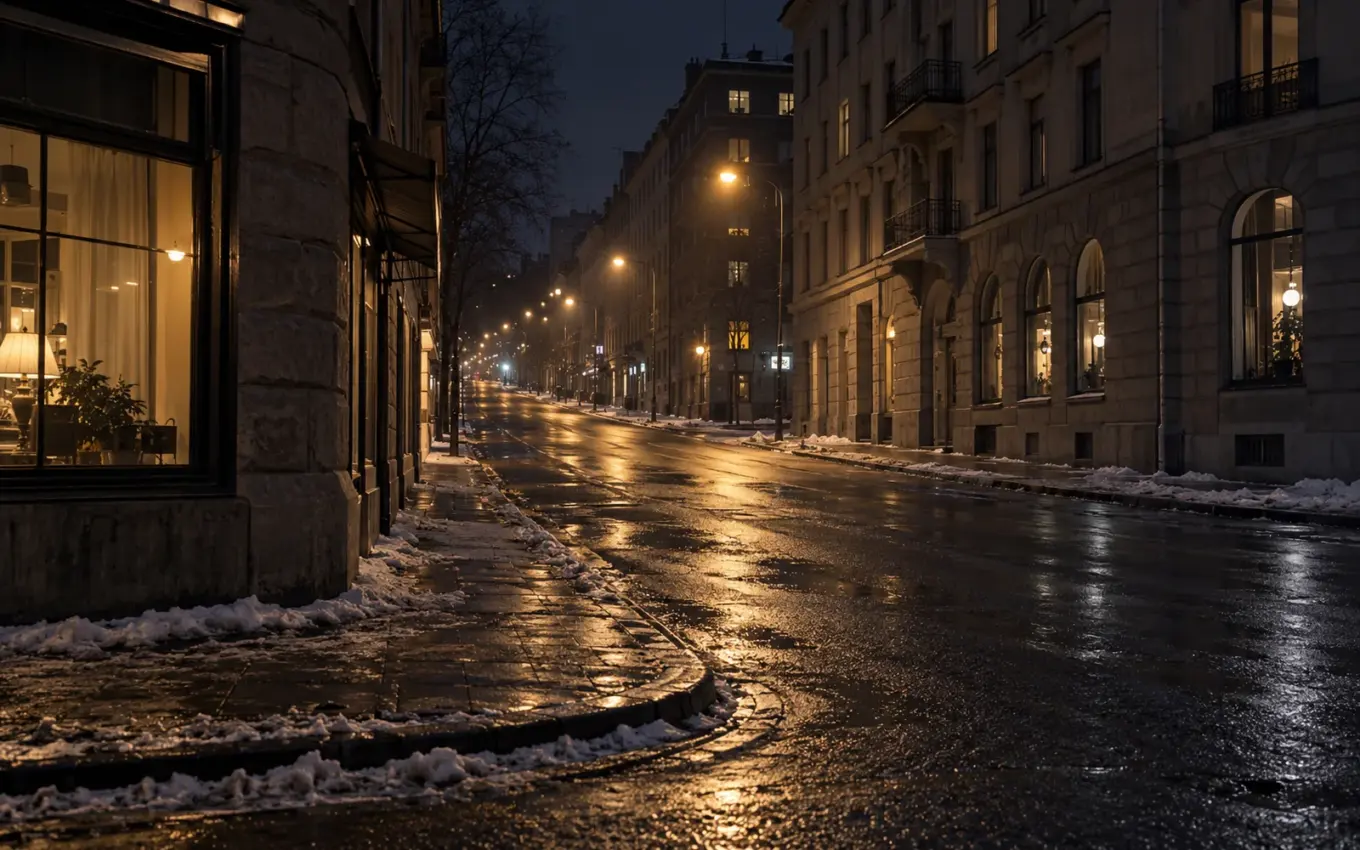
Palme and members of his family had been to the Grand cinema. Afterwards, he and Lisbeth continued on foot along Sveavägen. At the junction with Tunnelgatan, a man came up behind them and fired two shots. Palme was fatally wounded; Lisbeth survived.
The Swedish Police’s current account of the investigation places the killing within the extraordinary inquiry that followed. The setting is central to its emotional impact. The prime minister was engaged in an activity that many residents could recognise as part of their own lives: going to a film and walking home afterwards.
Police place the shooting at 23:21. The precision of that time contrasts with the uncertainty that followed it. Investigators eventually accumulated hundreds of shelf-metres of interviews and documents. The work could establish a detailed setting for the crime without resolving the identity of the person who committed it. The record grew because people kept looking; its size alone could not supply the missing connection between an individual suspect and the shots fired on Sveavägen.
The familiarity did not make the attack less political in its consequences. A democratically elected leader had been killed in public. The uncertainty about the gunman’s identity immediately became a question about the country’s ability to establish what had happened to its own head of government.
A conviction did not survive appeal
Christer Pettersson became a prominent suspect. He was convicted in 1989, but Svea Court of Appeal acquitted him later that year. The police history records both outcomes. Describing him simply as the convicted killer omits the decision that overturned the conviction.
The case continued to generate competing lines of inquiry and theories. Some concerned lone offenders; others proposed political conspiracies. Their existence demonstrates the scale of the debate, not the truth of the explanations being proposed.
A long investigation can accumulate a tremendous amount of material without acquiring the particular evidence needed to identify a perpetrator. Every additional file increases what can be examined. It does not automatically increase the strength of a specific accusation. In the Palme case, the volume of information became famous in its own right, while the central burden of proof remained unmet.
What prosecutors announced in 2020
On 10 June 2020, chief prosecutor Krister Petersson closed the preliminary investigation. He identified Stig Engström, a man who had been present in accounts surrounding the scene and who had died in 2000, as the suspected perpetrator.
The Prosecution Authority’s contemporary announcement records the original reason for closure: the suspect was dead. Engström could not be prosecuted, and the allegation was never tested in a criminal trial against him.
That limitation was not a technical footnote. A press conference can set out a prosecutor’s assessment, but it does not provide the same process as a contested trial. The distinction became even more important when the closure decision was later reviewed and the evidential basis for naming Engström was reconsidered.
The December 2025 review changes the position
Director of Prosecution Lennart Guné reviewed the matter after a request to reopen the investigation. On 18 December 2025, the Prosecution Authority announced that it would remain closed, but with a different justification. The available evidence was not sufficient to identify Engström as the perpetrator.
The Authority’s English-language announcement and the translated review decision set out the change. The decision also examined the prospect of obtaining useful new evidence from Palme’s coat using newer techniques and found no sufficient basis to resume the investigation on that ground.
The result should not be softened into a claim that the earlier accusation was simply confirmed. Nor does it identify a different killer. It leaves a narrower and less satisfying conclusion: the material available does not prove who committed the murder, and the proposed additional work was not judged capable of changing that position sufficiently.
What remains after forty years of theories
An unresolved assassination invites a special kind of certainty. Political disagreement, a suspicious coincidence or an apparently persuasive reconstruction can seem to supply what the official record lacks. The stronger the national desire for an ending, the more compelling a complete narrative may feel.
But the story’s emotional importance cannot lower the standard of evidence. Pettersson’s acquittal must remain an acquittal. Engström’s posthumous identification must be read alongside the 2025 correction. Neither man should become a confirmed murderer through the repetition of an outdated summary.
The case began with two people leaving a cinema and a gunman disappearing into a city. Its most enduring horror is the distance between how public the killing was and how uncertain its responsibility remains. Sweden has spent decades examining the night. The examination has not produced an answer that the surviving evidence can securely bear.