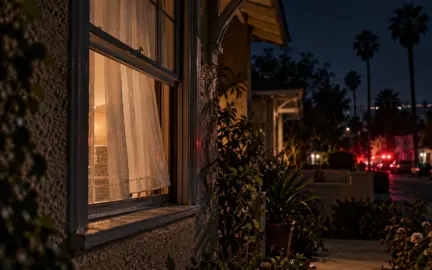
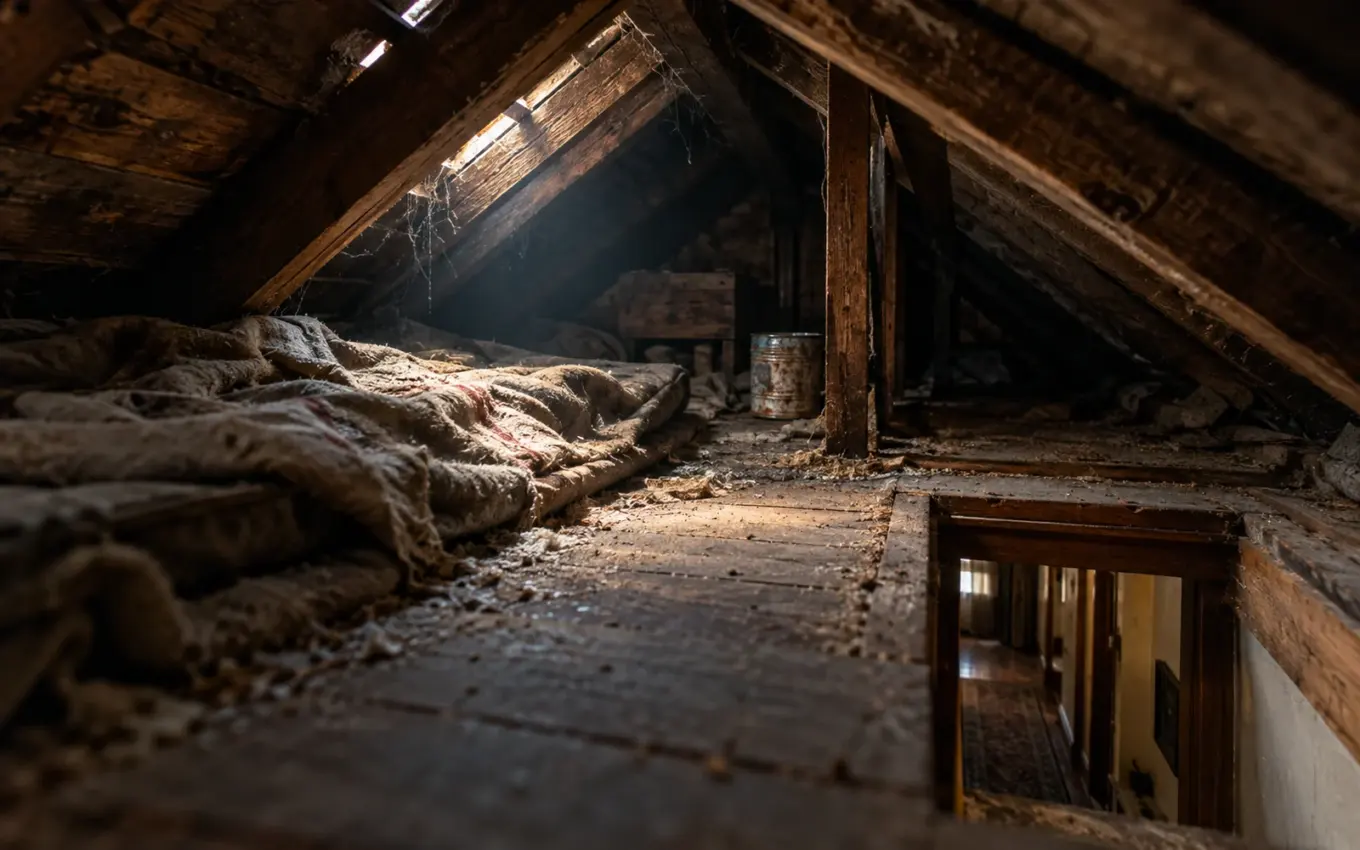
The Denver Spider Man was not a figure seen outside a window and gone when the police arrived. He was inside the house. For months after Philip Peters was murdered in 1941, the man responsible remained hidden above the rooms where people tried to understand the crime.
The disturbing noises and missing food eventually had an explanation. It was worse than a haunting: another human being had continued living close enough to come down into the house when he believed it was safe. [1]
A Familiar Home
Philip Peters had lived in his Denver house for decades. He was a retired railroad employee, a husband and a musician. His wife, Helen, was recovering in hospital after an injury, leaving him alone at home in the period before his death. Neighbours helped by inviting him to meals.
On October 17, 1941, Peters encountered an intruder in the house and was killed. The subsequent search failed to find the man who had attacked him. [1]
The house did not stand in an inaccessible wilderness. It was part of a neighbourhood where people noticed one another’s routines. That makes the case particularly invasive. The safeguards most people imagine around a home—familiar streets, nearby friends, a history of ordinary days—were all present.
What was missing was knowledge of the space overhead.
An attic is easy to reduce to storage in the mind: insulation, beams, old possessions, a hatch that is opened infrequently. Its purpose is not to be occupied. That expectation would become the concealment on which the case depended.
The Disturbances Afterward
When Helen returned from hospital, the home she entered was already the scene of her husband’s death. A friend stayed to help her. In the months that followed, reports described food disappearing, unexplained sounds and things not being where they were expected to be. The friend believed something was wrong with the house and left. Helen eventually went to live with her son. [1]
The popular ghost story almost writes itself at this point. A death has occurred. The bereaved return. Ordinary objects move or vanish. A sound comes from a space that is supposed to contain no one.
The historical explanation is more intimate and less comforting. The disturbances were not signs that something from outside life had entered the building. They were consistent with a living person making use of a building that other people did not know they were sharing.
There is no need to imagine him listening to a particular conversation or watching a particular sleeping person. The record does not provide those scenes. The established fact of his continued concealment is enough.
The person the police had been trying to locate had not needed to travel far away. The search had passed beneath him.
The Denver Spider Man Above the Closet
In July 1942, police surveillance finally led officers back inside. They saw movement, followed a noise upstairs and caught a man attempting to disappear into a small attic opening. Theodore Coneys was pulled into view.
History Colorado’s account describes a cramped hiding place and the discovery of the long-term intruder. The physical limits of the attic helped produce the newspaper nickname that attached itself to him: Denver’s Spider Man. [2]
The name can make the case seem theatrical. The reality was a concealed man in a space investigators had not successfully cleared, relying on the difference between a house being searched and every part of it being understood.
Coneys had known Peters before the killing. After his capture, he confessed. He was convicted of murder in 1942 and received a life sentence. [3]
The discovery closed the central mystery. It also changed the meaning of everything that had happened in the house since the death. The missing food had not been misplaced. The noises had not required an impossible explanation. The emptiness people believed they had established had been incomplete.
The Ceiling Between Them
Many frightening house stories depend on an invisible presence. The Denver Spider Man case is different because the presence eventually became visible. Officers found a person, and a prosecution followed. The evidence did not dissolve into an unresolved claim.
That resolution is precisely what makes the earlier months so chilling.
When we walk through a familiar home, most of its spaces are classified before we look at them. A cupboard contains coats. A ceiling separates one room from another. A small opening leads to somewhere too awkward to be worth considering.
Coneys’s concealment exploited that ordinary mental map. The house contained more usable space than its occupants and investigators had accounted for. The danger occupied the difference.
Philip Peters’s life should not disappear behind the nickname of his killer. He was the person whose home was invaded, whose death brought people to search it and whose family had to return to a place that no longer meant safety.
The final discovery did not reveal a ghost. It revealed how close an unanswered question can remain while everyone is looking elsewhere.
Above the rooms, beyond a small opening, the missing man had been there all along.
Sources and record notes
Record type: Researched nonfiction. Filed: October 15, 2026.
Established facts: Philip Peters was killed at home in October 1941. Theodore Coneys hid in the attic until police discovered him in July 1942. He was convicted of murder.
Uncertainty: Historical summaries differ on some dates and details of the confrontation. The story avoids a precise arrest day, disputed measurements and reconstructed dialogue.
- Denver Public Library — The Tale of the Denver Spider Man
- History Colorado — Colorado Heritage, March/April 2016, Denver’s Spider Man of Moncrieff Place
- Wikipedia — Theodore Edward Coneys (secondary chronology and references)
Explore the DarkRecord story archive, or read how DarkRecord labels and sources its stories.