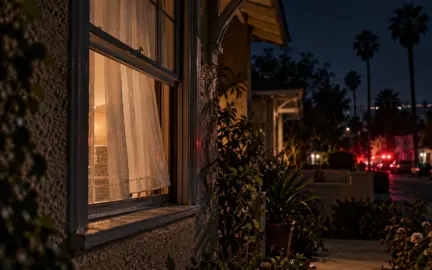
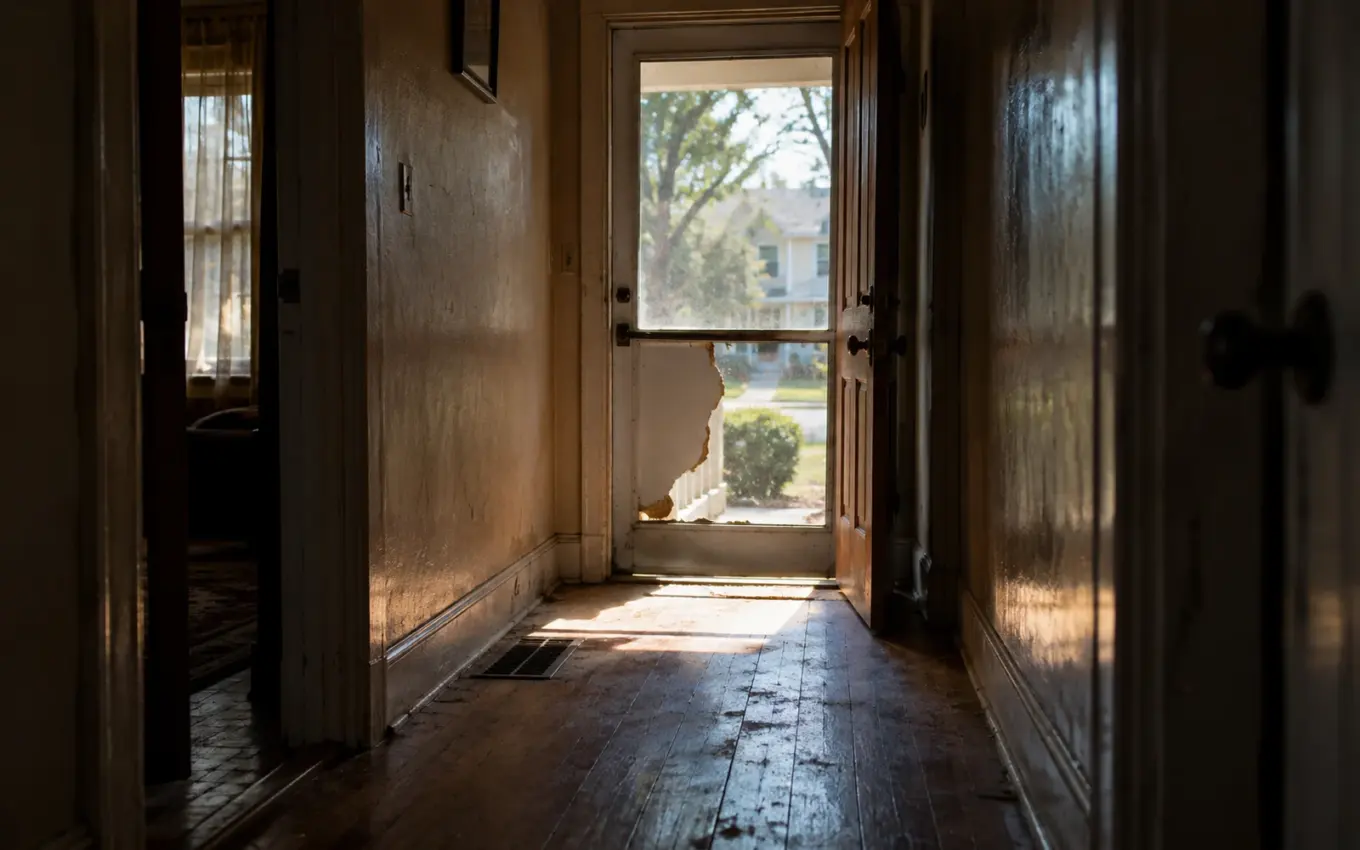
The Cleveland kidnappings did not end when someone recognised the house as a place of imprisonment. They ended when Amanda Berry reached its front door and made herself visible from the street.
For years, she, Gina DeJesus and Michelle Knight had been missing while still alive inside an ordinary residence. On May 6, 2013, an opportunity opened. Berry took it. A blocked storm door still stood between her and the outside world. [1][2]
The Names Behind the Cleveland Kidnappings
Knight, Berry and DeJesus were abducted separately between 2002 and 2004. Their disappearances became investigations with photographs, appeals and families trying to locate people who had stopped coming home.
An FBI announcement from 2010 shows how the search for missing young people in Cleveland continued in public years after the abductions. By May 2013, another FBI announcement could name the three women in a very different context: they had been found alive. [4][5]
The space between those two kinds of announcement contains the true scale of the case. It was not one terrible night followed by an immediate search and rescue. Years passed. People outside aged, changed jobs and continued routines. The women inside were forced to live within an abuser’s control.
Survivor interviews describe prolonged confinement, deprivation and violence. Those facts do not need graphic reconstruction to be understood. The central fact is that leaving was not a simple physical action available whenever someone decided to attempt it. Threats and enforced dependence were part of the captivity. [1]
The street outside remained a street. Reaching it remained dangerous.
The Opportunity at the Door
Berry later described discovering that her captor, Ariel Castro, was away and that she had an unusual opportunity to get downstairs. She reached the front entrance. The inner door could be opened, but the outer storm door was secured.
She was able to put an arm outside and call for help. Neighbour Charles Ramsey came to the entrance and helped break an opening through which she could get out. Berry escaped with her daughter, who had been born during her captivity. [2]
The physical scale of that moment is almost unbearable. After years in which the city was inaccessible, the outside world was immediately beyond a door. Yet even at that distance, freedom was not something she could simply step into.
Her calls reached another person. He acted. The obstruction that had kept her inside became something people on both sides could work against.
There is no need to invent what she thought with each movement. She has spoken publicly about the risk and urgency. Her own account provides a stronger basis than any imagined line of dialogue could supply.
The Cleveland kidnappings turned on that combination of opportunity, action and help.
The Officers Who Went Inside
Berry called emergency services and identified herself. Officers arriving on Seymour Avenue encountered a woman whose face they knew from years of missing-person publicity, now standing before them with a child.
Anthony Espada and Michael Tracy later described going into the house and finding Knight and DeJesus. Their interviews convey the shock of discovering living people behind names that had belonged to long-running investigations. [3]
The house’s ordinary exterior had contained an extraordinary crime. That fact is sometimes used to invite speculation about every neighbour or passer-by who had been nearby. The established account supports something more specific: the women were held there, Berry created an opening and responding people brought the others out.
The recovery was followed by a prosecution. Castro pleaded guilty to hundreds of criminal counts and received life imprisonment without parole, plus an additional thousand years. The outcome established responsibility in court. [3]
It did not mean the survivors’ lives should remain permanently organised around the man responsible.
Beyond the House
Berry, DeJesus and Knight have each had to decide how to live after a crime that made their names internationally recognisable. Later interviews describe new lives, family relationships and work helping others. Berry’s reporting on missing people and DeJesus’s advocacy are part of that history. [1]
A story that ends with the front door breaking would leave out those years. A story that ends with the sentencing would make a courtroom the final owner of their experience. Neither ending is sufficient.
Still, the image of the door remains difficult to forget because it reverses an ordinary assumption. Most people treat a front door as the boundary protecting them from danger outside. For the women in this house, that boundary helped keep danger close and help far away.
On May 6, the meaning changed. A voice passed through. A neighbour answered. Police followed the voice into a place the women had not been free to leave.
The house is part of their history. Their continued lives are part of it too.
The people on the missing posters were not only found.
They came back into a world that had been waiting for them.
Sources and record notes
Record type: Researched nonfiction. Filed: October 15, 2026.
Established facts: Michelle Knight, Amanda Berry and Gina DeJesus were abducted separately between 2002 and 2004. Berry escaped on 6 May 2013, prompting the rescue of the others. Ariel Castro pleaded guilty and was sentenced.
Uncertainty: The account is based on public survivor interviews and official material. It does not invent private conversations or reproduce graphic abuse.
- ABC News — Survivors on their journey from captivity to helping others
- ABC News — How the Cleveland kidnapping survivors made their escape
- ABC News — Responding officers recall finding the survivors
- FBI — National Children’s Day, May 2013
- FBI — National Missing Children’s Day, May 2010
Explore the DarkRecord story archive, or read how DarkRecord labels and sources its stories.