In the Chowchilla kidnapping, the school bus was found empty. The children were not wandering nearby, and their driver had not abandoned them. Twenty-six children and Ed Ray had been taken somewhere far harder to search: into a van buried at a rock quarry.
They were alive underground while the world above tried to work out where a busload of people could have gone. [1]
The Road After Swimming
On July 15, 1976, Ray was driving children home from a swimming outing in California’s Madera County. The passengers ranged from five to fourteen years old. Armed kidnappers stopped the bus on a country road and removed the people aboard.
The bus was concealed in a drainage area. The captives were transferred into vans and driven for hours before reaching a quarry near Livermore. Their journey had become deliberately unreadable: a vehicle that could be found in one place, people who had been carried far from it and no reliable way for those people to tell the outside world where they were. [1]
A school bus is usually one of the most visible objects on a road. Its colour, route and passengers make it recognisable. The crime’s first terrifying transformation was to separate the children from that recognisable object.
The second was to move them into a space where recognition from outside was almost impossible.
The Chowchilla Kidnapping Goes Underground
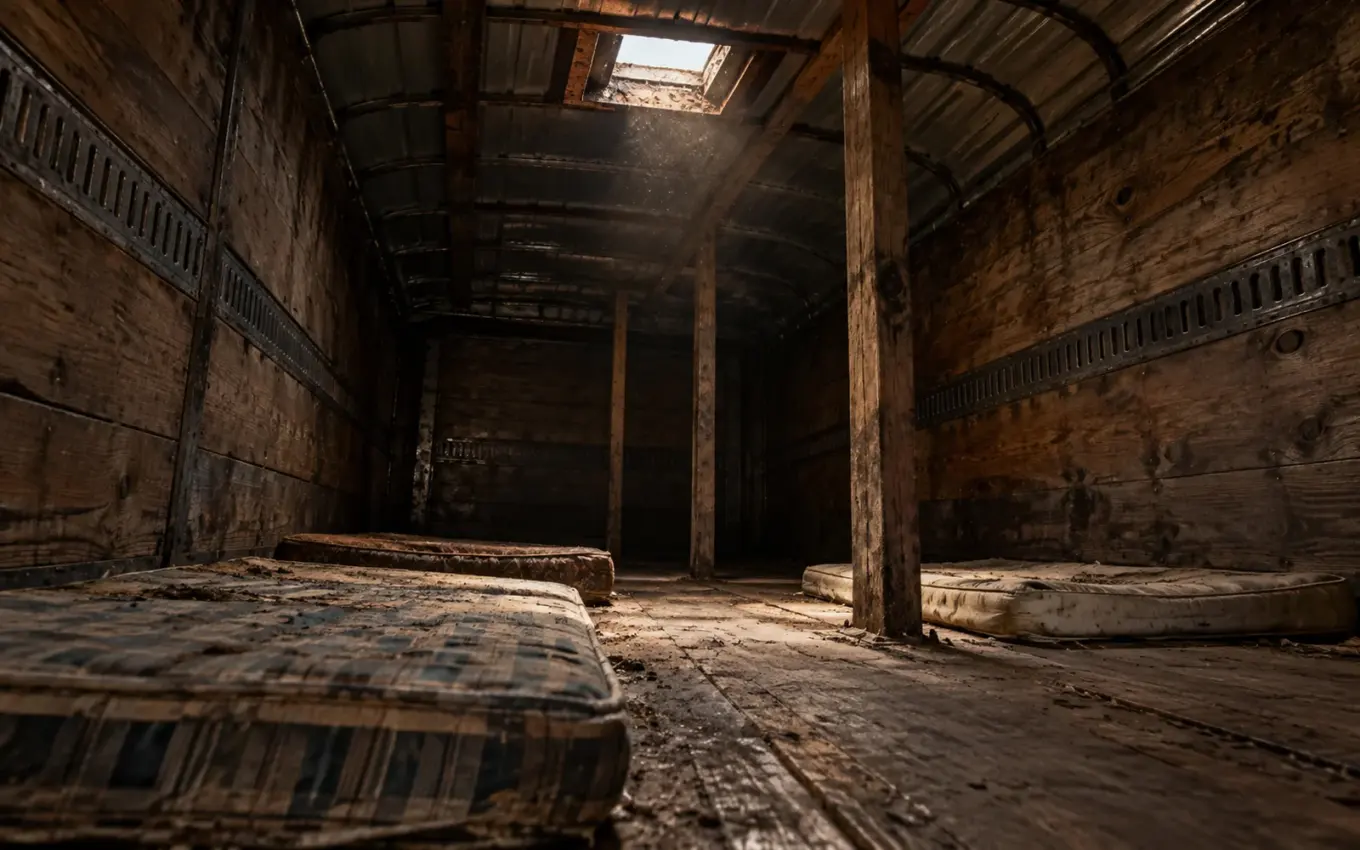
The captors confined the group inside a buried van. It was not the yellow school bus that went underground, although later retellings sometimes merge the two vehicles. The distinction matters: the search could locate the bus without locating anyone who had been riding in it.
The kidnappers intended to demand ransom. They had made a prison beneath the surface and expected its occupants to remain there while the demand was dealt with. [2]
For the people inside, the future depended on something more immediate than negotiations. The enclosure was crowded. Its supports and access arrangements were not a guarantee of safety. A place that had been designed to hold people could still fail around them.
That is the special horror of this case. The danger was not only the men who had brought them there. It was the environment those men had created and then left them to survive.
Above ground, distance can be measured in roads and towns. Underground, a much smaller distance becomes absolute. Daylight may be physically near while remaining unreachable through a ceiling that will not open.
There were twenty-seven people in that enclosed space, and none had chosen to be there.
They Did Not Keep Waiting
Ray and older children worked to force a way out. Fourteen-year-old Michael Marshall became a central figure in the escape. After approximately sixteen hours underground, the captives succeeded in getting through the obstruction and reaching the surface. Everyone survived. [1][2]
It is important not to write that result backward into the hours before it. Survival was not inevitable because we know the outcome. A successful escape is still an event that could have failed at several points, lived by people who did not know what the next effort would achieve.
Nor should the escape be reduced to a single heroic gesture. The documented accounts describe persistence: people working against confinement while caring about the children around them. The older children were still children. The adult responsible for them was also a captive.
Their captors had treated waiting as something they could impose. The group’s refusal to remain passive changed the outcome.
When they reached help, the story became a rescue rather than the disappearance their families had feared. Before dawn on July 17, they returned to Chowchilla under police escort. The city would later name its largest park for Ed Ray. [1]
The Part That Did Not End at Daylight
The Chowchilla kidnapping is often described through its most sensational contrast: twenty-seven people buried alive, twenty-seven people escaping. The two numbers are the same, so the story can appear to close neatly.
The survivors’ later public accounts make clear that it did not.
Inside Edition brought survivors together decades afterward to discuss what they had endured. A&E’s reporting likewise describes the lasting psychological consequences. Getting out of the trailer ended the physical imprisonment. It did not immediately remove the experience from dreams, ordinary journeys or the expectation that the world was safe. [2][3]
The fact that all the captives lived is a reason to remember their achievement, not a reason to minimise what was done to them.
For parents and searchers, the empty bus was the visible part of the crime. It offered a location and a terrible absence. For the children and Ray, the real emergency was happening elsewhere, under ground that could look unremarkable from above.
That separation gives the case its enduring chill. People could be searching with urgency and still be unable to see the place where help was needed.
The children did not wait for that place to be discovered.
They came out of the earth themselves.
Sources and record notes
Record type: Researched nonfiction. Filed: October 15, 2026.
Established facts: On 15 July 1976, 26 children and driver Ed Ray were abducted from a school bus. They were confined in a buried van near Livermore and escaped. All 27 survived.
Uncertainty: The school bus itself was not buried. Survival did not mean the end of the children’s trauma.
- City of Chowchilla — 1976 Bus Kidnapping
- A&E — 27 People Were Kidnapped, Buried Alive—and Somehow Escaped
- Inside Edition — 1976 Chowchilla Kidnapping Survivors Share Their Stories
Explore the DarkRecord story archive, or read how DarkRecord labels and sources its stories.