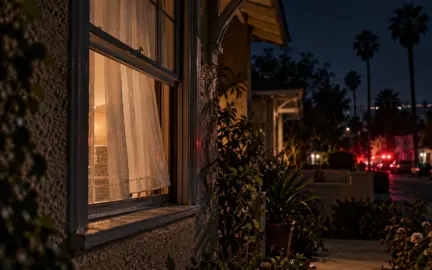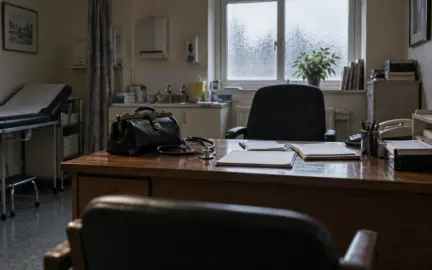
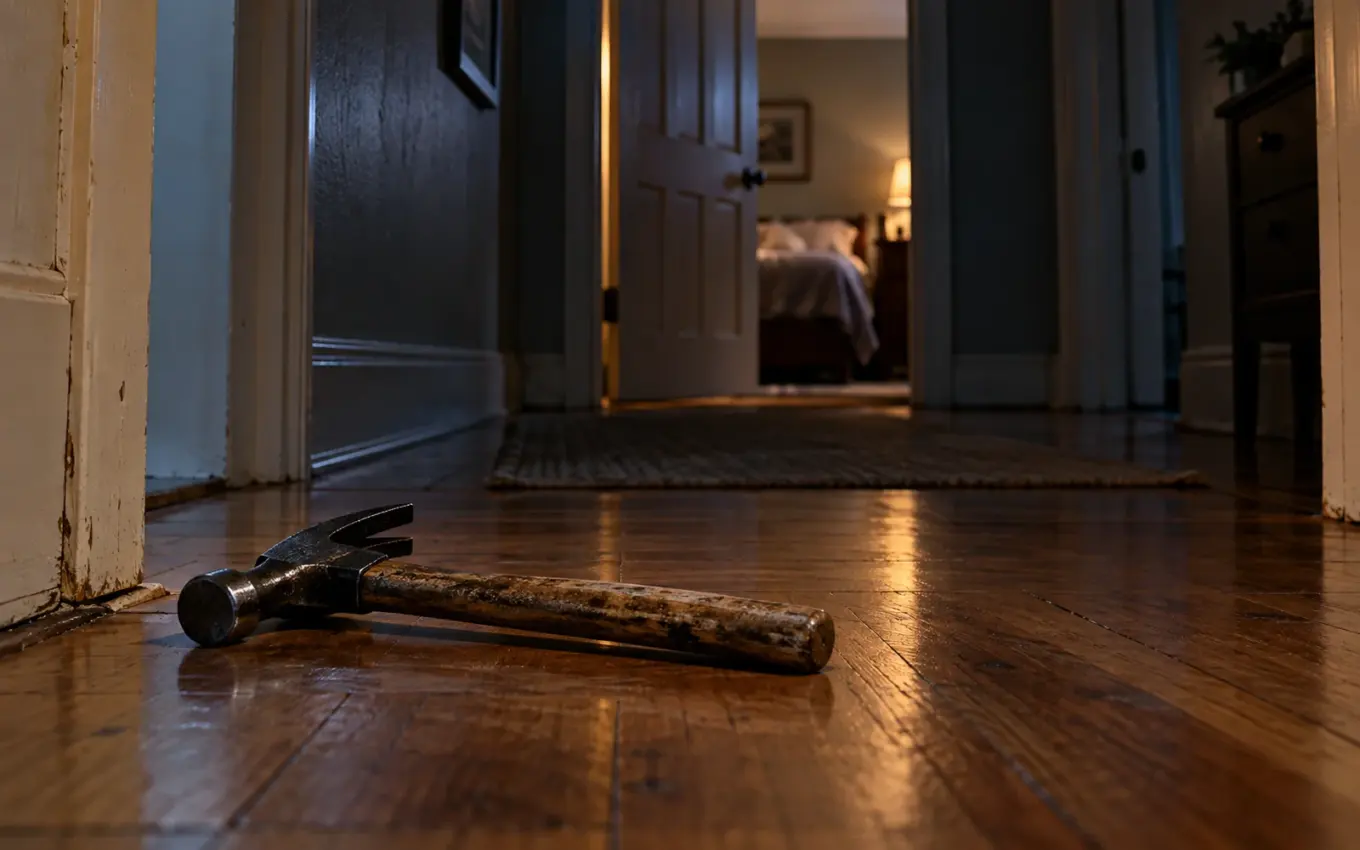
Susan Kuhnhausen came home from work on September 6, 2006, expecting the private part of her day to begin. She was an emergency-room nurse in Portland, Oregon. The stranger waiting inside her house had arrived with a different expectation.
He was armed with a hammer. His name was Edward Haffey, and the attack that followed was not a robbery gone wrong. Investigators would uncover a plan directed specifically at her. [1]
Susan Kuhnhausen Comes Home
The most unsettling element of a home invasion is often the change in a place’s meaning. A hallway exists to take someone from one room to another. A bedroom door marks a familiar turn in a familiar routine. When an attacker is already inside, those ordinary features become the setting for a crisis before the person arriving has understood that a crisis exists.
In Kuhnhausen’s case, the encounter became a prolonged struggle. She fought back and survived. Haffey died during the confrontation. Police treated her actions as self-defence. [1]
The later headlines often concentrated on the physical result: a nurse had overcome a man sent to kill her. That is true, but it can make the event sound like a contest with a clean beginning and end.
It was an attempt on someone’s life in the place where she should have been able to put down her working day.
Nothing about the result makes the danger less real. The fact that she survived should not turn the attack into a spectacle detached from the person who had to survive it.
The Explanation Behind the Attack
What investigators found afterward changed the crime from an encounter with an unknown intruder into an act of betrayal. Kuhnhausen’s estranged husband, Michael Kuhnhausen, had arranged for Haffey to kill her. The husband was convicted in the murder-for-hire plot. [2]
This is the second, deeper violation in the story. The man who attacked her was a stranger, but the danger had been directed by someone who knew her life.
A random intrusion leaves one kind of question: why this house? A planned attack leaves another: who knew enough to choose the moment and expected not to be held responsible afterward?
The investigation supplied an answer about responsibility. It could not reverse what discovering that answer meant. The attack was not a threat she had happened to encounter on the way home. It had been waiting at home because someone had intended it to be there.
That is why the Susan Kuhnhausen case remains disturbing after its central mystery is solved. The explanation does not make the familiar world feel safer. It reveals how the familiar world was used against her.
The Person Behind the Headlines
Contemporary discussion of the case noted how readily news coverage turned her into a striking headline. The Truth About Nursing examined that reporting alongside the wider issue of violence faced by nurses and the assumptions made about their work and physical abilities. [3]
Her professional experience mattered to how people understood her response. It should not become a claim that anyone subjected to an attack ought to be able to do the same. A person’s survival in one set of circumstances is not a standard against which another victim can be judged.
The crime was not her responsibility. Neither was it a test she had been required to pass.
Later public accounts identified her as Susan Walters. She became a speaker and advocate for victims’ rights, bringing attention to the parts of survival that a dramatic headline usually leaves out. [2]
Those parts included navigating a criminal justice system whose separate stages did not always provide a clear path for the person harmed. Knowing that someone has been convicted is different from knowing what will happen next, what information will be available and how to prepare for changes in that person’s custody.
The danger had entered her life in one room. Its consequences extended through institutions, paperwork and years.
What Survival Required Afterward
Multnomah County’s account of Walters’s advocacy describes her contribution to a project intended to make information more accessible to crime victims. She spoke from experience about the need for support and time to make decisions after a prosecution. [2]
That work belongs in this story because it resists the easiest ending. The attack was not over, in every meaningful sense, when she reached a neighbour’s house. Nor was her future reducible to the identity of the man who had arranged it.
She survived a deliberate attempt to remove that future. She then used her experience to argue that other survivors should not have to assemble a route through the system while still dealing with what had happened to them.
The chilling image remains the first one: a person coming home, a stranger already inside, the ordinary expectation of safety collapsing within a few steps.
But it is not the final image.
The final image belongs to the woman who walked out of that house alive and kept speaking for herself afterward.
Sources and record notes
Record type: Researched nonfiction. Filed: October 15, 2026.
Established facts: Susan Kuhnhausen, later Susan Walters, survived a hammer attack at home on 6 September 2006. Edward Haffey died during the struggle. Her estranged husband was convicted in the murder-for-hire plot.
Uncertainty: The narrative avoids invented dialogue and tactical instructions. Later advocacy is documented in county reporting and her public interviews.
- Willamette Week — A Hit Man Came to Kill Susan Kuhnhausen. She Survived. He Didn’t.
- Multnomah County — Susan Walters and the crime victims’ portal
- The Truth About Nursing — Contemporary discussion of the 2006 reporting
Explore the DarkRecord story archive, or read how DarkRecord labels and sources its stories.