
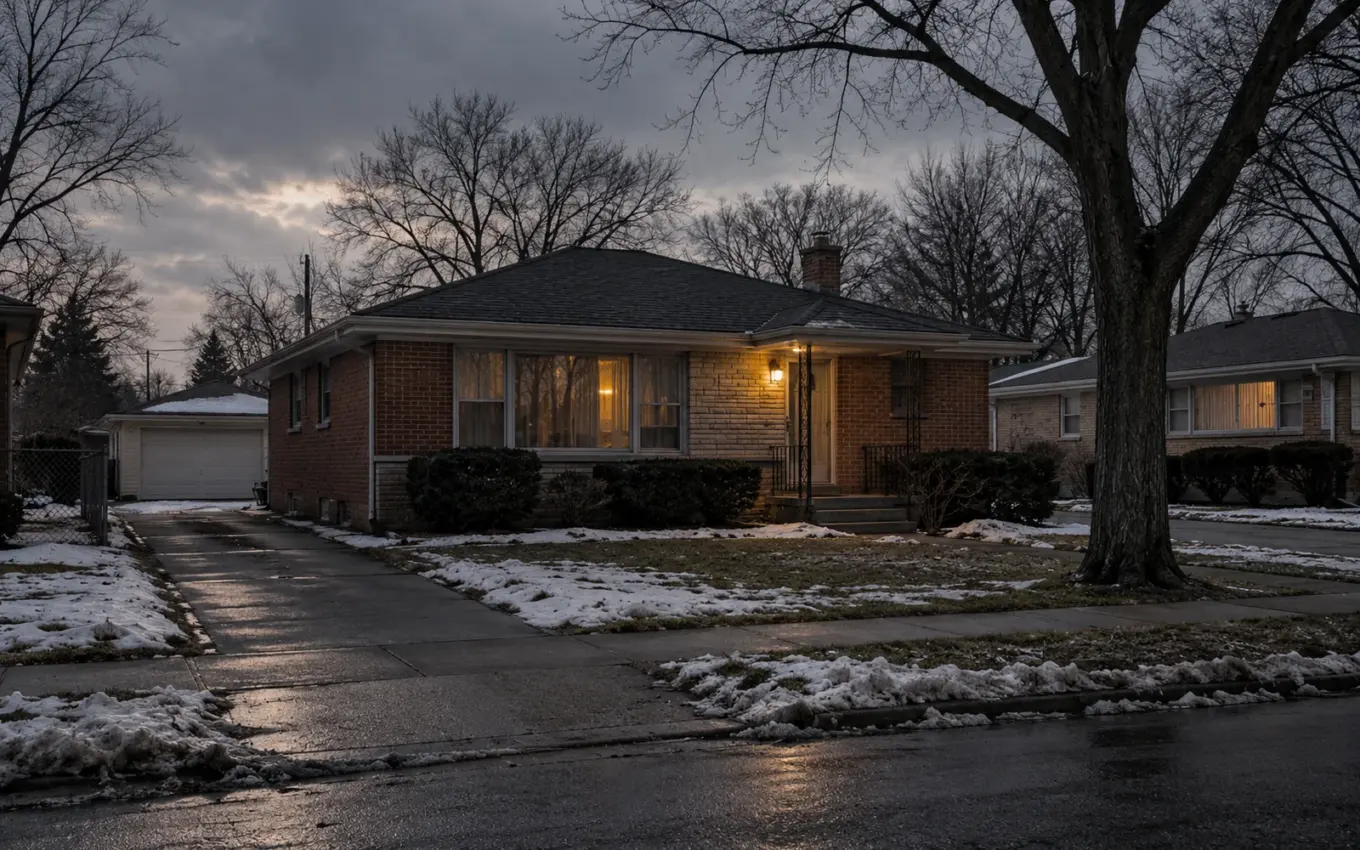
John Wayne Gacy did not live outside his community. He ran a business, met neighbours and took part in local activities. When investigators began recovering the remains of murdered boys and young men at his home in December 1978, that familiarity became part of the shock. A place people could pass without alarm had concealed an extraordinary number of deaths.
The discovery solved one terrible question: who had killed them. It did not answer every question about who the victims were. Some of that work would continue for decades.
John Wayne Gacy and the community around him
Gacy’s public activities helped create an impression of someone recognisably involved in everyday life. A contractor and political volunteer, he also performed as a clown at community events. The costume later became the most recognisable image attached to the case.
In a National Institute of Justice interview about identifying the victims, Cook County investigator Jason Moran describes that public life alongside the crimes. The contrast is unsettling, but the clown persona should not be allowed to become an explanation. A costume did not commit the murders. A man whose activities gave other people reasons to recognise him did.
That difference matters because a spectacular image can conceal an ordinary investigative problem. People who are known to their neighbours are not necessarily known in the ways that would expose abuse. Familiarity can provide information. It can also encourage assumptions that are difficult to dislodge.
What investigators found in 1978
Gacy was arrested in December 1978. Investigators recovered numerous victims from beneath and around his home; other victims had been disposed of elsewhere. He was convicted of murdering 33 teenage boys and young men.
The recovery operation created a second immense task. Finding remains did not automatically establish a name. Decomposition and the limitations of identification methods meant that some families could be given answers while others remained in uncertainty. The original investigators used the tools available to them, including dental information and comparisons with missing-person reports.
The scale of the scene could easily make the victims appear as a number before anything else. Yet every identification represented a different relationship between the evidence and a person who had existed outside it. A family needed more than confirmation that someone had been killed. They needed to know whether the person they had been seeking was among those found.
A conviction left unfinished work
Gacy’s conviction in 1980 and execution in 1994 established the principal criminal outcome. They did not identify all his victims. In 2011, Cook County Sheriff Tom Dart reopened the effort to identify the eight who were still unnamed at that point.
The Cook County Sheriff’s account of the renewed identification work makes the objective explicit: the investigation was not reopening the question of whether Gacy had committed the murders. It was trying to restore identities that the original work had not been able to establish.
That is a different kind of persistence from the search for an unknown killer. There is no new defendant waiting at the end of it. The result may instead be a conversation with a family that has spent years without a reliable explanation for a disappearance. The importance of that conversation does not depend on whether another prosecution is possible.
Victim Five becomes Francis Wayne Alexander
In 2021, investigators identified a victim recovered from the crawl space in December 1978 as Francis Wayne Alexander. He had been born in North Carolina and later lived in New York before moving to Chicago. He was believed to have been 21 or 22 when Gacy killed him.
The identification combined genetic genealogy with independent checks. Potential family connections provided a lead. Investigators then obtained family DNA samples and examined financial, public and other records to confirm it. The official announcement describes those different strands rather than presenting a database match as an answer that required no further work.
At the time of that announcement, the renewed project had also identified William Bundy and James Haakenson. Other inquiries prompted by the effort had helped resolve unrelated deaths and locate missing people. The work reached beyond the original crime because the search for names required investigators to examine lives as well as remains.
The story beyond the killer’s photograph
The Cook County Sheriff’s Police history preserves the recovery operation within the agency’s own record. It belongs beside the later forensic work. One part of the history concerns the extraordinary discoveries made in 1978; another concerns what investigators could still learn from those discoveries many years later.
Keeping both in view changes the ending. The physical search at the house could conclude while a family’s search remained open. A recovered person and an identified person are not always the same thing in a difficult investigation.
The most famous photograph offers a quick way to recognise the murderer. The identification work asks readers to take longer over the people he killed. Francis Wayne Alexander was not Victim Five during his life. That designation described the gap in what investigators knew after his death.
The house, the public persona and the number 33 explain why the discovery shocked the world. The continuing effort to replace numbers with names explains why the case should still matter. The killer’s identity was established long ago. The obligation to identify and remember the people he took did not end when he died.