Blanche Monnier was alive when the police entered the room. That is the fact that makes the discovery in Poitiers in 1901 so difficult to comprehend. They had not found the remains of someone whose disappearance had ended long ago. They had found a woman still living in conditions that should never have been allowed to continue.
She was fifty-two. For roughly a quarter of a century, her existence had narrowed within the family home. Outside it, the years had continued. [1][4]
The Room Where Blanche Monnier Was Found
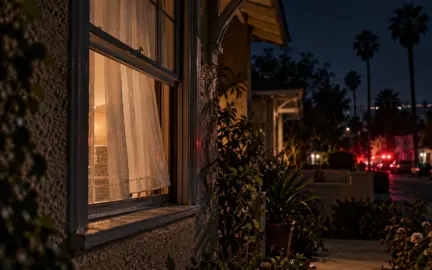
An anonymous letter brought the authorities to the Monnier household in May 1901. The family was socially respectable, connected with the town’s educated and established circles. The accusation therefore pointed toward a place whose public reputation did not suggest the conditions inside.
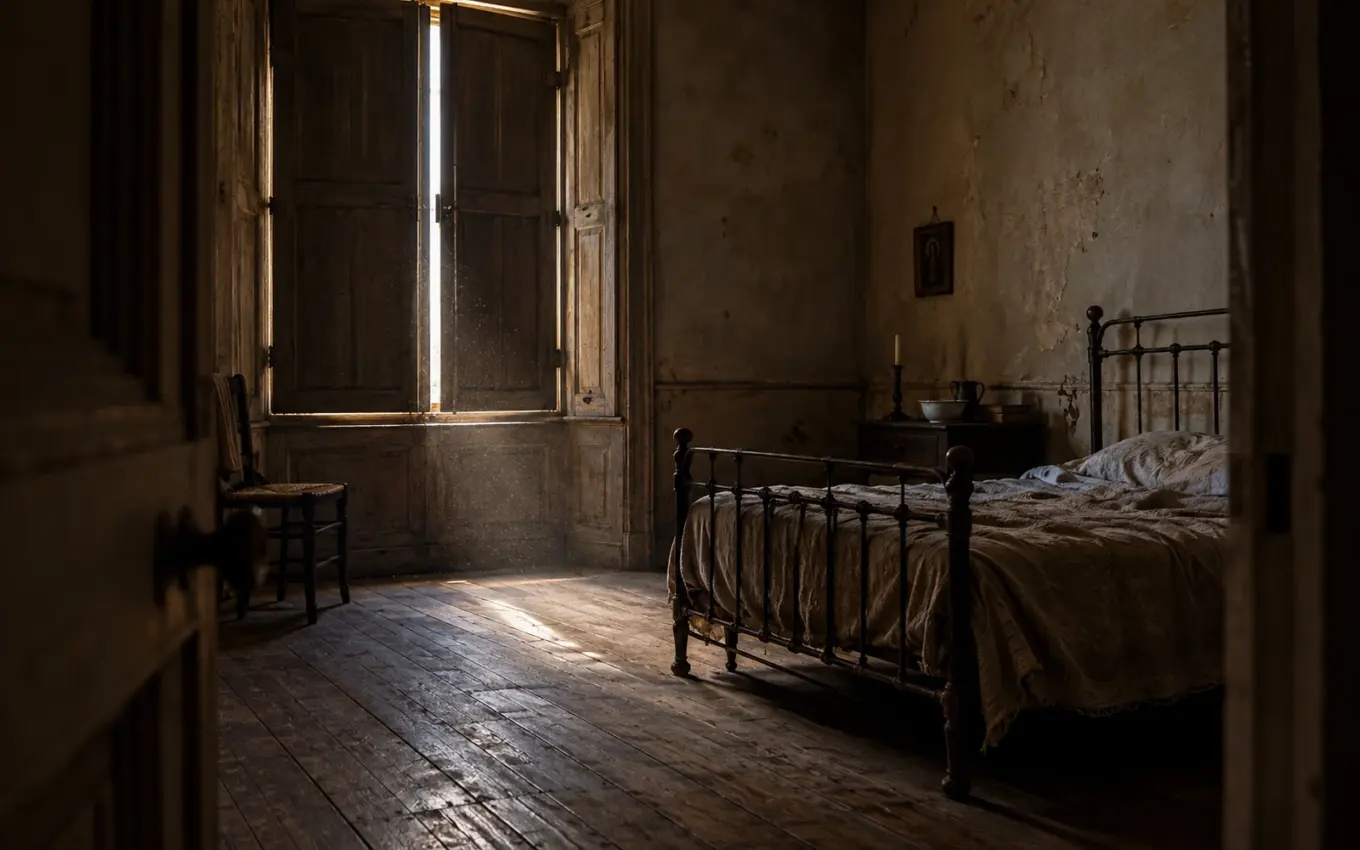
When police reached Blanche on May 23, they found her extremely weak and severely neglected in a darkened room. The shutters had been kept closed. Contemporary reporting described a bed and surroundings in appalling condition. She was taken to hospital. [1]
The essential horror does not depend on repeating the degrading language used by some of those newspapers. Blanche was a person in need of care, not a spectacle made more truthful by describing her as less than human.
The visible condition of the room was enough to establish the crisis. Someone had been living there while ordinary life continued nearby. The front of the house and the room inside belonged to the same building, but they told radically different stories about what the household was.
Police had crossed from one into the other by opening a door.
The Story People Wanted to Explain It
The case quickly acquired a simple and memorable explanation: a young woman had loved a man her mother disapproved of, and the mother had punished her by shutting her away for twenty-five years.
Versions of that account remain common. Historical research has challenged the certainty with which it is told. Legal historian Jean-Marie Augustin, working from the judicial material, has emphasised questions of mental distress, family conduct and the way the press shaped the scandal. The exact origins and mechanisms of Blanche’s long isolation are more complicated than the popular forbidden-romance plot. [2][3]
That complication should not soften what police discovered. Disagreement about why a person came to live in a room does not make severe neglect acceptable. Nor does an unproven motive need to be supplied for the conditions to be horrifying.
The distinction is between two questions: what happened to Blanche, and which explanation later narrators found easiest to repeat.
A clear villain and a single thwarted romance create a story that can be told quickly. A household allowing intolerable conditions to become normal is a different kind of terror. It raises questions about recognition, intervention and the authority a family can exercise behind closed doors.
The Family in Public
The discovery became a national scandal. Blanche’s mother was arrested but died before a trial could determine criminal responsibility. Her brother Marcel was prosecuted and initially convicted. He was later acquitted on appeal, in a decision connected with the legal limits of punishing omission under the law then in force. [3]
That outcome is often misunderstood as either proof that nothing serious had happened or proof that a modern legal category must have applied exactly as it would today. Neither conclusion follows. The proceedings occurred under a historical legal system with particular offences and limits.
The public had already seen the case through newspaper language and images. The court had to address the legal responsibility of a particular defendant. Blanche’s condition remained real regardless of the distance between those two processes.
Respectability had not prevented the discovery. Public outrage did not provide a simple legal ending. The woman at the centre of the scandal still needed care after the crowds and arguments had moved elsewhere.
That is one of the case’s most unsettling features: the public revelation was dramatic, but it did not transform the previous decades into something that could be repaired at the same speed.
The Years Outside the Room
Blanche lived until 1913, receiving institutional care after her discovery. The popular version sometimes treats the police entry as a final rescue scene and stops there. Her subsequent life makes that ending insufficient. Survival did not give her back the years that had passed in isolation. [4]
We do not possess a continuous account of what every day in the house had been like for her. Inventing remembered conversations or describing her private thoughts would fill the most intimate part of the story with words that are not hers.
What can be understood without inventing those words is the scale of elapsed time. Twenty-five years contains changes in neighbours, work, public life and family relationships. For someone whose world has narrowed to a room, those changes may occur without producing a meaningful way out.
The Blanche Monnier case is frightening because the hidden place was not beyond the reach of society. It existed inside a town, inside an established household, behind shutters people could pass without knowing what they concealed.
The room did not need to be lost. Someone needed to insist on seeing it.
When the police finally entered, the person inside was still there, and the years outside had already gone.
Sources and record notes
Record type: Researched nonfiction. Filed: October 15, 2026.
Established facts: Police discovered Blanche Monnier in appalling conditions in her family home on 23 May 1901. Her mother died before trial. Her brother’s conviction was overturned on appeal. Blanche received institutional care and died in 1913.
Uncertainty: The familiar forbidden-romance explanation and the exact mechanisms of confinement are disputed. The article distinguishes discovery evidence, period sensationalism and modern historical interpretation.
- RetroNews/BnF — 1901: L’ignoble cas de la Séquestrée de Poitiers
- Le 7 — Jean-Marie Augustin on La séquestrée de Poitiers
- Charente Libre — Historical reporting and interview with Jean-Marie Augustin, 26 November 2015
- Wikipedia — Blanche Monnier (secondary biographical chronology)
Explore the DarkRecord story archive, or read how DarkRecord labels and sources its stories.