The Isdal Woman left a trail through hotels, stations and cities. Investigators could follow portions of it. They could compare handwriting, connect luggage to a body and reconstruct journeys under several different names.
The one thing those records would not give them was the name that belonged to her.
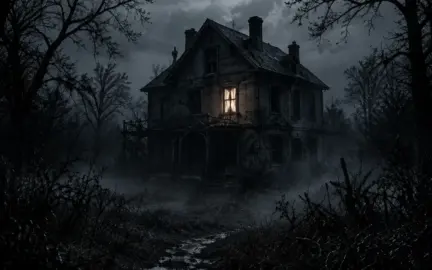
On November 29, 1970, a father walking with his daughters found a woman’s body in Isdalen, near Bergen, Norway. Her death became the beginning of an investigation into a life that appeared, in important respects, to have been arranged to resist identification. [1]
The Valley Outside the City
Isdalen lay close enough to Bergen for walkers to reach it, but the discovery was away from the places where a traveller normally leaves a documented record. There was no hotel receptionist to ask why she had arrived, no ticket that established her purpose in the valley and no person beside her who could explain the final hours.
The body had been badly burned. Identifying marks had been removed from clothing and belongings. These were physical facts that encouraged suspicion, but they did not identify who had removed the marks or why. [1]
That distinction matters. A secretive life is not proof of a particular secret. The absence of labels can tell investigators that an ordinary route to identification has been obstructed. It cannot, by itself, tell them whether the woman was hiding from a person, concealing an occupation or acting for some other reason entirely.
The temptation is to turn every missing label into evidence of espionage. The record supports a more unsettling conclusion: someone had made an unnamed woman harder to name, and the motive remained out of reach.
The Isdal Woman’s Borrowed Names
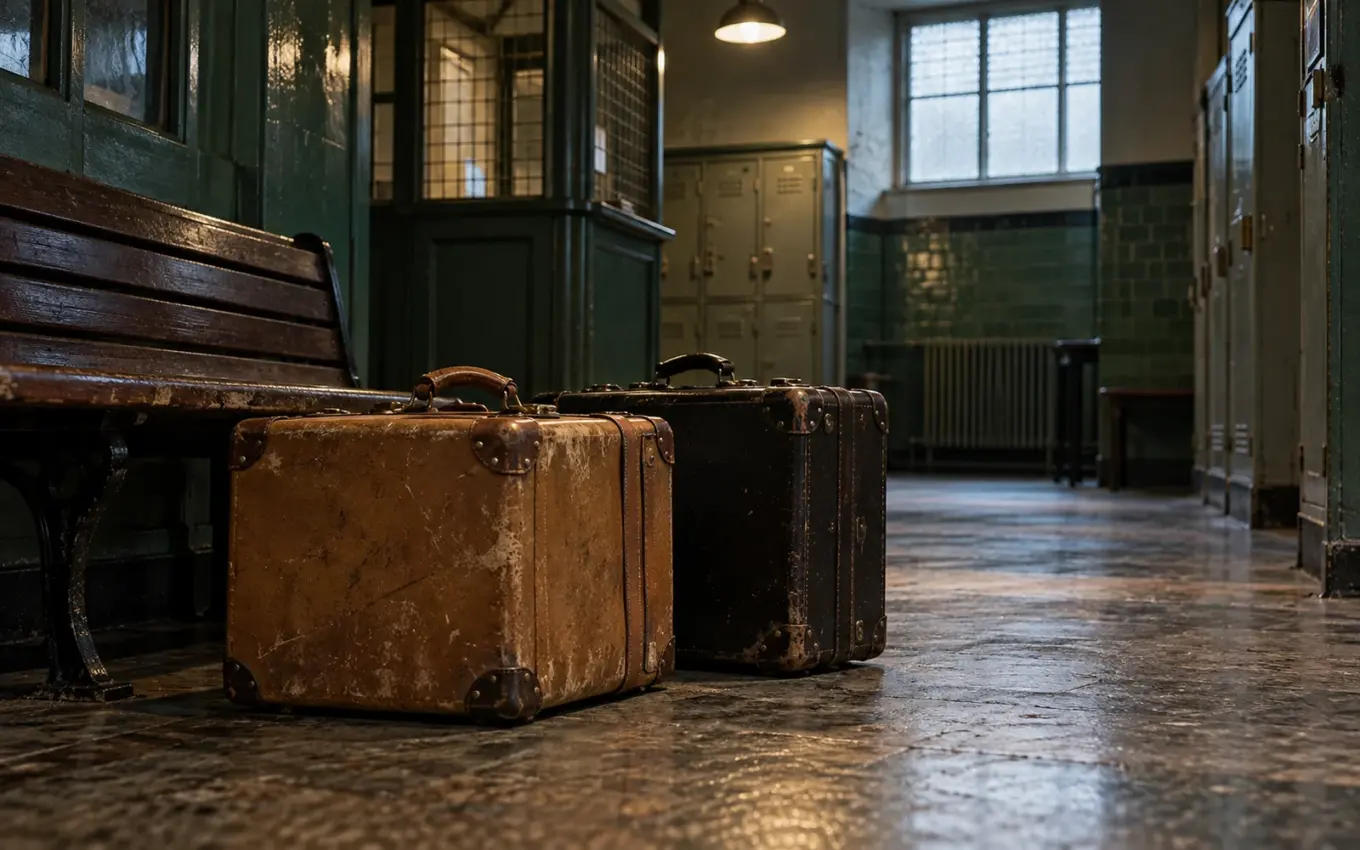
Luggage linked to the woman and records from hotels gave investigators a wider picture. She had used multiple aliases. Different registration forms appeared to belong to the same traveller, while a coded-looking notebook could be read, at least in part, as a record of movements and dates.
Witness descriptions added a person to those records: a traveller who could present herself in different settings, sometimes speaking different languages, and whose identity did not resolve when those settings were compared. [4]
For a hotel employee, a name on a form is usually the beginning of recognition. In this case, names became another obstacle. A receptionist could remember a face or an encounter without knowing whom they had actually met.
The journey could be reconstructed in pieces. The life behind it could not.
The Isdal Woman is therefore not simply a case in which a body went unidentified. Investigators found evidence of a functioning life: travel, purchases, rooms, possessions and routines. Those things usually lead outward to colleagues, relatives or a permanent address. Here, the connections repeatedly stopped short.
What Her Teeth Preserved
Decades later, renewed investigation brought forensic techniques to material that had been retained. The BBC and NRK project Death in Ice Valley revisited the case through interviews, archival work and modern examination. NRK journalist Marit Higraff discussed that process in a public interview, describing a search that combined old witness memories with new scientific possibilities. [2]
The most enduring evidence was not a hidden message. It was biological material.
A 2021 paper in Biomolecules discussed the woman as Case 16 in research on dental dating. The researchers examined teeth from the case, including material that had formed before the rise in atmospheric radiocarbon associated with nuclear weapons testing. Other dental analysis contributed an estimate of her birth period. These techniques could constrain possibilities; they did not produce a verified identity. [3]
It is a remarkable reversal. Marks could be removed from possessions. A name could be changed on a form. Teeth retained information about the years in which they had formed, without the woman needing to write anything down.
But a chemical signature is not a memory. It does not know the name of a mother, a childhood street or a person who might recognise the face in a reconstruction.
The Person Behind the Case Name
The original investigation leaned toward suicide. Later reporting has continued to examine the circumstances and the difficulties with establishing exactly what happened. Claims that she was a spy or the victim of a particular operation remain theories. They are not a documented biography. [1][4]
It would make a more conventional thriller to choose one of them. A passport could be invented, a handler assigned, a final meeting staged in the valley. That version would satisfy the shape of a story while replacing the woman’s actual life with somebody else’s imagination.
Her real story is more difficult to finish.
There are records of where she slept and names she gave to strangers. There is evidence of routes across a continent and scientific work that reaches back toward her childhood. There is a place in Bergen where she was buried.
Yet the name most readers know describes the valley in which she was found.
The Isdal Woman passed through rooms where people saw her, served her and wrote down her details. Those encounters were real. The person at their centre remains beyond the edge of the record, as though every introduction had led to another closed door.
Sources and record notes
Record type: Researched nonfiction. Filed: October 15, 2026.
Established facts: An unidentified woman was found in Isdalen on 29 November 1970. Investigators linked her to hotel aliases and luggage with identifying marks removed. Preserved teeth have supported later forensic work.
Uncertainty: Her legal identity, reasons for using aliases and precise final circumstances remain unresolved in the cited research. Espionage is a theory, not an established occupation.
- Life in Norway — The Unsolved Mystery of the Isdal Woman
- Life in Norway — Interview with Death in Ice Valley journalist Marit Higraff
- Biomolecules 2021, volume 11, article 1655 — dental dating research, including Case 16
- Wikipedia — Isdal Woman (secondary chronology and references)
Explore the DarkRecord story archive, or read how DarkRecord labels and sources its stories.